Quotessence
Home / Quotes / Quote by Theodore Roosevelt

Quote by Theodore Roosevelt

“Fellow-feeling. . .is the most important factor in producing a healthy political and social life. Neither our national nor our local civic life can be what it should be unless it is marked by the fellow-feeling, the mutual kindness, the mutual respect, the sense of common duties and common interests, which arise when men take the trouble to understand one another, and to associate together for a common object. A very large share of the rancor of political and social strife arises either from sheer misunderstanding by one section, or by one class, of another, or else from the fact that the two sections, or two classes, are so cut off from each other that neither appreciates the other’s passions, prejudices, and, indeed, point of view, while they are both entirely ignorant of their community of feeling as regards the essentials of manhood and humanity.”

Quote by Theodore Roosevelt

Author
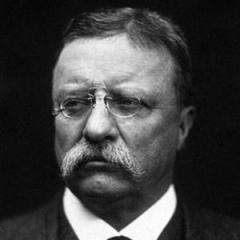
Theodore Roosevelt
Theodore Roosevelt

Theodore Roosevelt was the 26th President of the United States, serving from 1901 to 1909. A progressive leader, he is known for his advocacy of the conservation movement, expansion of federal government regulation, and efforts to improve the lives of American citizens. more

You May Also Like

“...if we do not know how to defend ourselves, our women and our places of worship by force of suffering, i.e., nonviolence, we must, if we are men, be at least able to defend all these by fighting." (MLK) "...If given a choice between violent resistance and passive acceptance, King and Gandhi both accepted violence..." "...like violence, it [non-violent resistance] was aggressive, but it was spiritually, bot physically, so." "...At the same time the mind and the emotions are active, actively trying to persuade the opponent to change his ways and convince him that he is mistaken and to lift him to a higher level of existence.”

“Traveling on, the shaft of his light reached now a great, dully shining oblong, and he stopped, surprised. Then, through the glass sides, he saw bright shapes of fish wheel in schools down the opaque water, startled by the illumination. Coming at last, and so suddenly, on life like his own, Mr. Lecky moved closer. The fixed flood of his light enveloped these small fish dimly, glowed back on him. They came sliding, drifting, mouths in motion, gills rippling, up the light, against the glass. Their senseless round eyes stared at Mr. Lecky. Idling with great grace, the extravagant products of selective breeding - fringetails, Korean, calico - passed, swayed about, came languidly back. Moving faster, stub-finned, crop-tailed danios from the Malabar coast appeared, hovered, taking the light on their fat flanks, now spotted, now iridescent pearl or opal. Seeing so many of them, so eager and attentive, Mr. Lecky felt an unexpected compunction. He was their only proprietor; and soon, trapped unnaturally here in the big tank, they would starve to death. His light went back to a counter he had just passed, showing him again the half-noticed packages - food for birds and pet animals, food, too, for fish. Returning to the tank, his light found many of the fish still waiting, the rest rushing back. He went and took a package, tore the top off, and poured the contents onto the rectangle of open water. It would perhaps postpone the time when, having eaten each other, the sick remainder must die anyway.”

“Vielleicht wird unser Vorurteil auch dadurch bestärkt, daß es – von außen gesehen – oft vom Leben Begünstigte zu sein scheinen, […] denen wir daher sozusagen das Recht nicht zusprechen wollen, daß sie erkrankten; kennt man ihre Lebensgeschichte, wird man seine Meinung revidieren müssen; letztlich leiden wir alle an nicht genügend verarbeiteter Vergangenheit; bei wem sie so beschaffen war, daß er sein Leben dennoch fruchtbar gestalten konnte, weil er aus ihr mehr Hilfen als Schädigungen mitbekam, der sollte aus der Dankbarkeit dafür Verständnis und Toleranz gegenüber den weniger Glücklichen aufbringen.”