Quotessence
Home / Quotes / Quote by J. K. Rowling

Quote by J. K. Rowling

“Utiliza el nombre correcto para las cosas. El miedo a un nombre aumenta el miedo a la cosa que se nombra.”

Quote by J. K. Rowling

Author
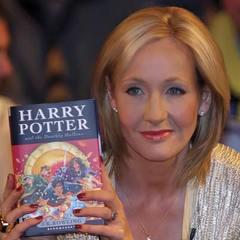
J. K. Rowling
J. K. Rowling

J.K. Rowling is a renowned British author, born on July 31, 1965. She gained worldwide fame for her Harry Potter series, which achieved immense success in various forms, including books, movies, video games, and theme parks. Rowling's works are celebrated for their rich imagination, profound themes, and unique narrative style. more

You May Also Like

“Were the judgments of mankind correct, custom would be regulated by the good. But it is often far otherwise in point of fact; for, whatever the many are seen to do, forthwith obtains the force of custom. But human affairs have scarcely ever been so happily constituted as that the better course pleased the greater number. Hence the private vices of the multitude have generally resulted in public error, or rather that common consent in vice which these worthy men would have to be law.”

“I gained everything. Or at least I'll think so," he growled, suddenly impatient, anxious, "when you give me a bloody answer to my bloody question. How many times are you going to make me ask you? Will you marry me, Gabrielle O'Callaghan? Yes or yes? And in case you're still managing to miss the point, the correct answer is 'yes.' And, by the way, anytime you'd like to tell me you love me, I wouldn't mind hearing it.”

“He was doing missionary work. But from the outset he had little success in convincing his charges of their responsibility for a sin committed at the beginning of creation, one which, as they understood it, they were ready and capable (indeed, they carried charms to assure it) of duplicating themselves. He did no better convincing them that a man had died on a tree to save them all: an act which one old Indian, if Gwyon had translated correctly, regarded as "rank presumption".”

“This book is intended for use in English courses in which the practice of composition is combined with the study of literature. It aims to give in a brief space the principal requirements of plain English style. It aims to lighten the task of instructor and student by concentrating attention (in Chapters II and III) on a few essentials, the rules of usage and principles of composition most commonly violated. The numbers of the sections may be used as references in correcting manuscript.”