Quotessence
Home / Quotes / Quote by Patricia Highsmith

Quote by Patricia Highsmith

“Therese's lips opened to speak, but her mind was too far away. Her mind was at a distant point, at a distant vortex that opened on the scene in the dimly lighted, terrifying room where the two of them seemed to stand in desperate combat. And at the point of the vortex where her mind was, she knew it was the hopelessness that terrified her and nothing else. It was the hopelessness of Mrs. Robichek's ailing body and her job at the store, of her stack of dresses in the trunk, of her ugliness, the hopelessness of which the end of her life was entirely composed. And the hopelessness of herself, of ever being the person she wanted to be and of doing the things that person would do. Had all her life been nothing but a dream, and was this real? It was the terror of this hopelessness that made her want to shed the dress and flee before it was too late, before the chains fell around her and locked.”

Quote by Patricia Highsmith

Work

The Price of Salt

A classic work that delves into the emotional depths of a forbidden romance, offering a timeless exploration of human connection and desire. more

Author
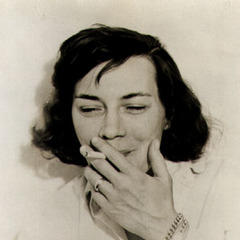
Patricia Highsmith
Patricia Highsmith

Patricia Highsmith was an American novelist renowned for her psychological thrillers. Her works often delve into the darker aspects of human nature, particularly themes of loneliness and fear. Her most famous works include 'The Price of Salt' and 'The Glass House'. more

You May Also Like

“Evolutionary scholars have long stressed the adaptive role of aggressive and antisocial behavior as a high-risk strategy for social and mating competition. In evolutionary psychopathology, antisocial disorders are usually regarded as costly but potentially adaptive strategies rather than behavioral dysfunctions. Some authors have focused specifically on the evolution of psychopathy, and argued that this condition embodies a "cheater" social strategy designed to exploit other people's trust and cooperative behavior while avoiding reciprocation.”

“The sexual competition model of eating disorders has two interlocking components. The first component is based on the universal male preference for a nubile -hourglass- body shape and the fact that women tend to accumulate body weight as they age, with the result that relative thinness is a reliable cue of youth and reproductive potential. The second component is specific to modern societies: as fertility declines and the age of reproduction shifts upward, women tend to retain an attractive nubile shape for longer, which increases the importance of thinness as an attractive display. At the same, a number of converging trends contribute to intensify real and perceived mating competition among women, especially for long-term partners. Specifically, socially imposed monogamy reduces the number of available men; urban living dramatically increases the number of potential desirable competitors; and the media paint a visual landscape full of unrealistically thin, attractive women. The net outcome of these social changes is a process of runaway sexual competition that leads to an exaggerated desire for thinness in girls and women. Ironically, the process is largely driven by female intrasexual competition rather than direct male choice, and the resulting -ideal body- may be too thin to be maximally attractive to men.”

“Mortality in Eating Disorders is partly caused by the medical complications of starvation and bingeing-purging, but suicide risk is also elevated. Suicide accounts for about 20% of deaths in anorexic patients; unsurprisingly, the risk is higher in AN-Bingeing/Purging than in AN-Restricted.”

“Disorders in the psychosis spectrum (schizophrenia spectrum disorder and dipolar disorder) have similar prevalance in males and females (with slightly higher male risk for schizophrenia), while men are more likely to be diagnosed with NPS (narcissistic personality disorder) than are women.”

“Evolution in the cognitive niche has endowed our species with remarkable abilities such as language, abstract reasoning, and sophisticated mentalizing. These species-typical innovations have been accompanied by rapid changes in brain structure and functionality. While adaptations such as language are hugely beneficial, they are also likley to carry some costs. A number of authors have argued that vulnerability to psychosis is one of those costs -the price our species pays for its unique set of cognitive skills. From this perspective, there are no individual fitness benefits to psychosis proneness; vulnerability to schizophrenia and other psychoses is a general byproduct of our evolved design, and unfortunate combinations of genetic and environmental factors determine the onset of a full-fledged disorder in some individuals.”