Quotessence
Home / Quotes / Quote by Richard Dawkins

Quote by Richard Dawkins

“[W]e may now be on the threshold of a new kind of genetic takeover. DNA replicators built 'survival machines' for themselves — the bodies of living organisms including ourselves. As part of their equipment, bodies evolved onboard computers — brains. Brains evolved the capacity to communicate with other brains by means of language and cultural traditions. But the new milieu of cultural tradition opens up new possibilities for self-replicating entities. The new replicators are not DNA and they are not clay crystals. They are patterns of information that can thrive only in brains or the artificially manufactured products of brains — books, computers, and so on. But, given that brains, books and computers exist, these new replicators, which I called memes to distinguish them from genes, can propagate themselves from brain to brain, from brain to book, from book to brain, from brain to computer, from computer to computer.”

Quote by Richard Dawkins

Work

The Blind Watchmaker: Why the Evidence of Evolution Reveals a Universe without Design

Presenting a detailed examination of the mechanisms of evolution, the book argues that natural selection is the primary driver of biological diversity and complexity, and challenges the notion of a divine creator in the process. more

Author
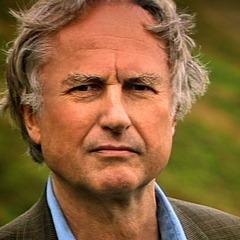
Richard Dawkins
Richard Dawkins

Richard Dawkins is a British ethologist, writer, and thinker, known for his contributions to evolutionary theory, particularly in the field of modern synthesis. He is widely recognized for his best-selling book 'The Selfish Gene', which explains the central role of genes in biological evolution. Dawkins has made significant impacts in the field of science communication and has sparked widespread discussions about human behavior and morality. more

You May Also Like

“[E]ach culture is just like a tree whose essence and whole potential are already contained in the seed. Nothing during the course of a civilization is ever discovered, or invented, or created, which was not already present inside that seed.”

“The Absolute Ignorance of evolution by natural selection is indeed capable of creating not just daisies and fish but also human beings who in turn have the competence to build cities and theories and poems and airplanes, and computers, which in turn could in principle achieve Artificial Intelligence with even higher levels of creative skill than their human creators.”

“Evolution is largely a temporal phenomenon, Merrill. The environment changes, and populations in that environment change in turn, or they languish. Individual organisms don't evolve; populations do. Nature doesn't give a damn about individuals. The only role we play in evolution is surviving long enough to give birth to offspring who are slightly different from us. Some of our offspring will prosper in a changing environment, and some of them will not. As for us individuals, once we've reproduced, nature has no more use for us. We perish along with our ill-adapted young. Death has always been an essential factor in species survival. Now consider the human race. We are a partial exception to the rule. Unlike other species, we have developed culture. Instead of adapting to a changing environment biologically, we can sometimes adapt to it culturally. If an Ice Age comes along, we don't need to grow fur on our bodies if we invent the fur coat. Culture allows us to adapt to almost any environment, including the harshest, like space. In fact, our cultural adaptation is so robust that it all but obviates the need to evolve biologically. We are so good at adapting to changing conditions with our knowledge and technology that we may deceive ourselves into believing that we are above nature. But only a fools believes that. Nature always has the last word. A star in our neighborhood could go supernova and wipe out all life in our solar system, and no amount of culture could save us from that. That, I believe, is the main reason you want to seed humanity throughout the galaxy. So as not to have all our eggs in one basket... The chief difference between biological and cultural adaptation is that while biological evolution doesn't care about individuals, cultural evolution does, often at the expense of the species. Look at how many times we've nearly wiped ourselves out through cultural means: the nuclear bomb, pollution, climate change, the Outrage. We can't seem to help ourselves. Look at what we've done: we've made individuals all but immortal, even when it means we can have no more children. In one stroke, we've eliminated the two key ingredients of evolution: offspring and death. From a biological perspective, we're skating on mighty thin ice. ... ...as long as the individual reigns supreme, there's a finite limit to our survival. ... We need a means for the individual, not just the species, to participate in biological evolution, and that's what my project is all about. We need to be able to let our biological bodies die, to have offspring that are molded by the changing needs of the environments we find ourselves in, and yet to serially inhabit these bodies as the same individual. That means we need to be able to move our minds from one body to the next. ... Mine is a singularity in which the obsolete individual is invited to cross over to the new, not simply to die out. The existing person need not die to make room for the newcomer. Anyone can play.”

“[W]e may now be on the threshold of a new kind of genetic takeover. DNA replicators built 'survival machines' for themselves — the bodies of living organisms including ourselves. As part of their equipment, bodies evolved onboard computers — brains. Brains evolved the capacity to communicate with other brains by means of language and cultural traditions. But the new milieu of cultural tradition opens up new possibilities for self-replicating entities. The new replicators are not DNA and they are not 158 The Blind Watchmaker clay crystals. They are patterns of information that can thrive only in brains or the artificially manufactured products of brains — books, computers, and so on. But, given that brains, books and computers exist, these new replicators, which I called memes to distinguish them from genes, can propagate themselves from brain to brain, from brain to book, from book to brain, from brain to computer, from computer to computer.”

“The ultimate cause of much historical, social and cultural change is the gradual accumulation of human knowledge of the environment. Human beings use the materials in their environment to meet their needs and increased human knowledge of the environment enables human needs to be met in a more efficient manner. The human environment has a particular structure so that human knowledge of the environment is acquired in a particular order. The simplest knowledge is acquired first and more complex knowledge is acquired later. The order of discovery determines the course of human social and cultural history as knowledge of new and more efficient means of meeting human needs, results in new technology, which results in the development of new social and ideological systems. This means human social and cultural history, has to follow a particular course, a course that is determined by the structure of the human environment.”

“The claim that I defend is that human culture started out profoundly Darwinian, with uncomprehending competences yielding various valuable structures in roughly the way termites build their castles, and then gradually de-Darwinized, becoming ever more efficient in its ways of searching Design Space. In short, as human culture evolved, it fed on the fruits of its own evolution, increasing its design powers by utilizing information in ever more powerful ways.”

“Quantity isnt to be equated with quality, but success in propagation is, in the end, as necessary for memes (however excellent) as it is for organisms. Most organisms leave no issue, and most published books have readerships in the dozens, not thousands, before going out of print for good. Even the greatest works of genius must still pass the test of differential replication.”

“The manifest image that has been cobbled together by genetic evolutionary processes over billions of years, and by cultural evolutionary processes over thousands of years, is an extremely sophisticated system of helpful metaphorical renderings of the underlying reality uncovered in the scientific image. It is a user-illusion that we are so adept at using that we take it to be unvarnished reality, when in fact it has many coats of intervening interpretive varnish on it.”