“Reason has moons, but moons not hers Lie mirrored on her sea, Confounding her astronomers, But, oh, delighting me!”
Quote by Ralph Hodgson
Work
Poems By Ralph Hodgson
Browse quotes and source details for this work. more
Author
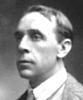
Ralph Hodgson
Ralph Hodgson (September 9, 1871 – November 3, 1962) was an English poet known for his concise, lyrical, and philosophical verses. His works often explore themes of nature, life, and humanity, with a fresh and profound style. Active in the early 20th century, his notable poems include 'The Bull' and 'The Song of the Swan'. He taught in Japan for many years, contributing to East-West cultural exchange. He spent his later years in the United States until his death. more
You May Also Like
“It's a new world we gotta build - founded on love, tempered by reason.”
Source: Visvavictor: Kanima Akiyor Kainat
Source: Pursued: God’s relentless pursuit and a drug addict’s journey to finding purpose
Source: The Advancement of Science: Science without Legend, Objectivity without Illusions
“Even happiness is transient, as it needs a reason. The ultimate state is bliss”
Source: A World of Yoga: 700 Asanas for Mindfulness and Well-Being
Source: Trust
Source: A Confession and Other Religious Writings
Source: The Roots of Appeasement: The British Weekly Press and Nazi Germany During 1930s