“The god abandons Antony When at the hour of midnight an invisible choir is suddenly heard passing with exquisite music, with voices ― Do not lament your fortune that at last subsides, your life’s work that has failed, your schemes that have proved illusions. But like a man prepared, like a brave man, bid farewell to her, to Alexandria who is departing. Above all, do not delude yourself, do not say that it is a dream, that your ear was mistaken. Do not condescend to such empty hopes. Like a man for long prepared, like a brave man, like the man who was worthy of such a city, go to the window firmly, and listen with emotion but not with the prayers and complaints of the coward (Ah! supreme rapture!) listen to the notes, to the exquisite instruments of the mystic choir, and bid farewell to her, to Alexandria whom you are losing.”
Quote by C.P. Cavafy
Work
This book compiles a selection of poems that showcase the depth and diversity of the author's poetic voice, exploring a range of subjects and employing different literary techniques. more
Author
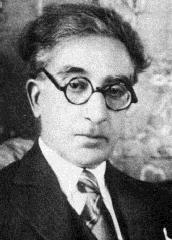
C.P. Cavafy, born Konstantinos Petrou Kavafis, was a prominent Greek poet known for his profound philosophical thoughts and rich historical background. His poetry, which is highly regarded as one of the most important of the 20th century, explores themes such as the meaning of human existence, love, history, and religion. Cavafy was born in Alexandria, Egypt, and his family was of Greek descent. He spent part of his childhood in Egypt and later moved to England to complete his education. Upon returning to Alexandria, he became a banker, but his main interest lay in literature and art. more
You May Also Like
“To assert dignity is to lose it.”
“It’s a matter of dignity,” the Chief explained. “At a certain point, that’s all you have left.”
“The most important things to be acquired for freedom and democracy, are identity and dignity.”