Quotessence
Home / Quotes / Quote by George Eliot

Quote by George Eliot

“Fancy what a game of chess would be if all the chessmen had passions and intellects, more or less small and cunning; if you were not only uncertain about your adversary's men, but a little uncertain also about your own; if your knight could shuffle himself on to a new square by the sly; if your bishop, at your castling, could wheedle your pawns out of their places; and if your pawns, hating you because they are pawns, could make away from their appointed posts that you might get checkmate on a sudden. You might be the longest-headed of deductive reasoners, and yet you might be beaten by your own pawns. You would be especially likely to be beaten, if you depended arrogantly on your mathematical imagination, and regarded your passionate pieces with contempt. Yet this imaginary chess is easy compared with the game a man has to play against his fellow-men with other fellow-men for his instruments.”

Quote by George Eliot

Work

Felix Holt: The Radical

Felix Holt: The Radical is a novel by English author Elizabeth Gaskell, published in 1866. The story is set in the 1830s and follows Felix Holt, a young man who becomes deeply involved in the Chartist movement, advocating for political reform and social justice. The novel delves into the complexities of Victorian society, examining the lives of the working class and the challenges they face. Gaskell's narrative provides a nuanced portrayal of political activism and its impact on individuals and communities. more

Author
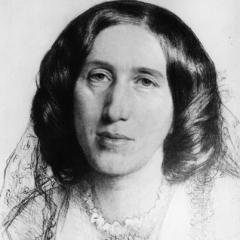
George Eliot
George Eliot

George Eliot, born Mary Ann Evans, was a renowned 19th-century British novelist. Her works are known for their profound psychological insights and critical exploration of social issues. With her unique narrative techniques and rich emotional expression, she has had a profound impact on literature. more

You May Also Like

“Oh ! aimer une femme ! être prêtre ! être haï ! l’aimer de toutes les fureurs de son âme, sentir qu’on donnerait pour le moindre de ses sourires son sang, ses entrailles, sa renommée, son salut, l’immortalité et l’éternité, cette vie et l’autre ; regretter de ne pas être roi, génie, empereur, archange, dieu, pour lui mettre un plus grand esclave sous les pieds ; l’étreindre nuit et jour de ses rêves et de ses pensées ; et la voir amoureuse d’une livrée de soldat ! et n’avoir à lui offrir qu’une sale soutane de prêtre dont elle aura peur et dégoût ! Être présent, avec sa jalousie et sa rage, tandis qu’elle prodigue à un misérable fanfaron imbécile des trésors d’amour et de beauté ! Voir ce corps dont la forme vous brûle, ce sein qui a tant de douceur, cette chair palpiter et rougir sous les baisers d’un autre ! Ô ciel ! aimer son pied, son bras, son épaule, songer à ses veines bleues, à sa peau brune, jusqu’à s’en tordre des nuits entières sur le pavé de sa cellule, et voir toutes les caresses qu’on a rêvées pour elle aboutir à la torture ! N’avoir réussi qu’à la coucher sur le lit de cuir ! Oh ! ce sont là les véritables tenailles rougies au feu de l’enfer ! Oh ! bienheureux celui qu’on scie entre deux planches, et qu’on écartèle à quatre chevaux ! — Sais-tu ce que c’est que ce supplice que vous font subir, durant les longues nuits, vos artères qui bouillonnent, votre cœur qui crève, votre tête qui rompt, vos dents qui mordent vos mains ; tourmenteurs acharnés qui vous retournent sans relâche, comme sur un gril ardent, sur une pensée d’amour, de jalousie et de désespoir ! Jeune fille, grâce ! trêve un moment ! un peu de cendre sur cette braise ! Essuie, je t’en conjure, la sueur qui ruisselle à grosses gouttes de mon front ! Enfant ! torture-moi d’une main, mais caresse-moi de l’autre ! Aie pitié, jeune fille ! aie pitié de moi !”

“Je te cherchai. Je te revis. Malheur ! Quand je t’eus vue deux fois, je voulus te voir mille, je voulus te voir toujours. Alors, — comment enrayer sur cette pente de l’enfer ? — alors je ne m’appartins plus. L’autre bout du fil que le démon m’avait attaché aux ailes, il l’avait noué à ton pied. Je devins vague et errant comme toi. Je t’attendais sous les porches, je t’épiais au coin des rues, je te guettais du haut de ma tour. Chaque soir, je rentrais en moi-même plus charmé, plus désespéré, plus ensorcelé, plus perdu !”

“His loyal and eager nature, brought for the first time to the test of love, gave itself utterly, and demanded a gift as utter without the reservation of one particle of the heart. He admitted no sharing in friendship. Being ready to sacrifice all for his friend, he thought it right and even necessary that his friend should wholly sacrifice himself and everything for him. But he was beginning to feel that the world was not built on the model of his own inflexible character, and that he was asking things which others could not give.”

“I cannot express it; but surely you and everybody have a notion that there is or should be an existence of yours beyond you. What were the use of my creation, if I were entirely contained here? My great miseries in this world have been Heathcliff’s miseries, and I watched and felt each from the beginning: my great thought in living is himself. If all else perished, and he remained, I should still continue to be; and if all else remained, and he were annihilated, the universe would turn to a mighty stranger: I should not seem a part of it.—My love for Linton is like the foliage in the woods: time will change it, I’m well aware, as winter changes the trees. My love for Heathcliff resembles the eternal rocks beneath: a source of little visible delight, but necessary. Nelly, I am Heathcliff! He’s always, always in my mind: not as a pleasure, any more than I am always a pleasure to myself, but as my own being. So don’t talk of our separation again: it is impracticable; and—”