Quotessence
Home / Quotes / Quote by William James

Quote by William James

“We can act as if there were a God; feel as if we were free; consider Nature as if she were full of special designs; lay plans as if we were to be immortal; and we find then that these words do make a genuine difference in our moral life.”

Quote by William James

Author
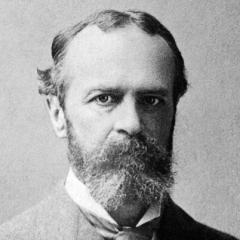
William James
William James

William James, born on January 11, 1842, and died on August 26, 1910, was an influential American philosopher, psychologist, and writer. He is considered one of the founders of functionalism in psychology and has had a profound impact on the fields of psychology, philosophy, and religion. more

You May Also Like

“We must frankly confess, then, using our empirical common sense and ordinary practical prejudices, that in the world that actually is, the virtues of sympathy, charity, and non-resistance may be, and often have been, manifested in excess. ... You will agree to this in general, for in spite of the Gospel, in spite of Quakerism, in spite of Tolstoi, you believe in fighting fire with fire, in shooting down usurpers, locking up thieves, and freezing out vagabonds and swindlers.”

“But petitional prayer is only one department of prayer; and if we take the word in the wider sense as meaning every kind of inward communion or conversation with the power recognized as divine, we can easily see that scientific criticism leaves it untouched. Prayer in this wide sense is the very soul and essence of religion.”

“Man's chief difference from the brutes lies in the exuberant excess of his subjective propensities his preeminence over them simply and solely in the number and in the fantastic and unnecessary character of his wants, physical, moral, aesthetic, and intellectual. Had his whole life not been a quest for the superfluous, he would never have established himself as inexpugnably as he has done in the necessary.”

“Religion, therefore, as I now ask you arbitrarily to take it, shall mean for us the feelings, acts, and experiences of individual men in their solitude, so far as they apprehend themselves to stand in relation to whatever they may consider the divine. Since the relation may be either moral, physical, or ritual, it is evident that out of religion in the sense in which we take it, theologies, philosophies, and ecclesiastical organizations may secondarily grow.”