Quotessence
Home / Quotes / Quote by Francis Crick

Quote by Francis Crick

Author

Francis Crick
Francis Crick

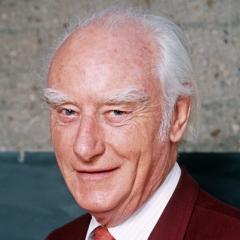
Francis Crick was a renowned scientist known for his significant contributions to the field of molecular biology. He, along with James Watson, was awarded the Nobel Prize in Physiology or Medicine in 1962 for their discovery of the double-helix structure of DNA. Crick's research had a profound impact on understanding the transmission of genetic information and the genetic basis of organisms. more

You May Also Like

“True, the fragile bodies of his fellows do not weigh down his plane; true, the fretful minds of weaker men are missing from his crowded cabin; but as his airship keeps its course he holds communion with those rare spirits that inspire to intrepidity and by their sustaining potency give strength to arm, resource to mind, content to soul. Alone? With what other companions would man fly to whom the choice were given?”

“The imagination doesn't crop annually like a reliable fruit tree. The writer has to gather whatever's there: sometimes too much, sometimes too little, sometimes nothing at all. And in the years of glut there is always a slatted wooden tray in some cool, dark attic, which the writer nervously visits from time to time; and yes, oh dear, while he's been hard at work downstairs, up in the attic there are puckering skins, warning spots, a sudden brown collapse and the sprouting of snowflakes. What can he do about it?”

“He pretended it was the only thing that kept him from it. But, far back in his mind, he wondered if he could write anything. Often the question threw itself at him when he was least expecting it. You have four hours every morning, the statement would rise like a menacing wraith. You have time to write many thousands of words. Why don't you? And the answer was always lost in a tangle of becauses and wells and endless reasons that he clung to like a drowning man at straws.”

“Lester del Rey told me repeatedly that the first and most important part of writing fiction is just to think about the story. Don't write anything down. Don't try to pull anything together right away. Just dream for a while and see what happens. There isn't any timetable involved, no measuring stick for how long it ought to take. For each book, it is different. But that period of thinking, of reflection, is crucial to how successful your story will turn out to be.”

“Our planning system was dynamite when we first put it in. The thinking was fresh; the form mattered little. It was idea oriented. We then hired a head of planning, and he hired two vice presidents, and then he hired a planner; and the books got thicker, and the printing more sophisticated, and the covers got harder, and the drawings got better.”