Quotessence
Home / Quotes / Quote by Marcus Vitruvius Pollio

Quote by Marcus Vitruvius Pollio

“The Phrygians select a natural hillock, run a trench through the middle of it, dig passages, and extend the interior space as widely as the site admits. Over it they build a pyramidal roof of logs fastened together, and this they cover with reeds and brushwood, heaping up very high mounds of earth above their dwellings. Thus their fashion in houses makes their winters very warm and their summers very cool.”

Quote by Marcus Vitruvius Pollio

Author
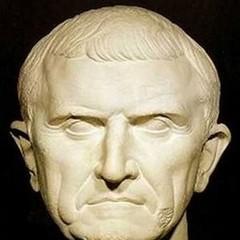
Marcus Vitruvius Pollio

Marcus Vitruvius Pollio, a renowned Roman architect, engineer, and writer, lived from 81 BC to 15 AD. He is considered one of the founders of Roman architecture and is best known for his work 'De Architectura', which has had a profound impact on the development of architecture throughout history. more

You May Also Like

“Fresh pitsand, however, in spite of all its excellence in concrete structures, is not equally useful in stucco, the richness of which, when the lime and straw are mixed with such sand, will cause it to crack as it dries on account of the great strength of the mixture. But river sand, though useless in "signinum" on account of its thinness, becomes perfectly solid in stucco when thoroughly worked by means of polishing instruments.”

“At Halicarnassus, the house of that most potent king Mausolus, though decorated throughout with Proconnesian marble, has walls built of brick which are to this day of extraordinary strength, and are covered with stucco so highly polished that they seem to be as glistening as glass. That king did not use brick from poverty; for he was choke-full of revenues, being ruler of all Caria.”

“The winter oak... is very useful in buildings but when in a moist place it takes in water to its centre... and so it rots. The Turkey oak and the beech both... take in moisture to their centre and soon decay. White and black poplar, as well as willow, linden, and the agnus castus... are of great service from their stiffness... they are a convenient material to use in carving.”