Quotessence
Home / Quotes / Quote by Norbert Elias

Quote by Norbert Elias

“The heart of assimilation process of absorbing minorities lies in the self-image of a nation. There are, as you will know, big differences for instance between the self-image of the French and the English. And the Germans, in accordance with their rather chequered history, had at least in the past very little capacity for absorbing minorities.”

Quote by Norbert Elias

Author
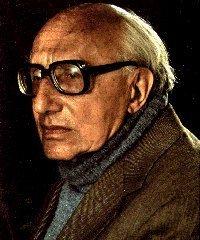
Norbert Elias
Norbert Elias

Norbert Elias (June 22, 1897 - August 1, 1990) was a German sociologist, one of the most important sociologists of the 20th century. He is known for his profound analysis of social change, the process of civilization, and the socialization of individual behavior. more

You May Also Like

“The number of those who have to be assimilated to the majority is not too high. It remains small compared with the numbers of the majority. But there is one thing - and that is the main reason for this digression - that French and British have in common: to this day they have an immense pride in being French, in being British. The fact that in the meantime both have come down to earth a little has not yet affected their pride in their own nationality and the fact that, if I may express it that way, they are mutual admiration societies: how fine the British are, how fine the French are.”

“Perhaps one could appoint three or four professional people specially concerned with the task of bridge building between the majority and the minority. Bridge building of this kind requires an effort from both sides. It's no good if the majority alone do it. The question is whether there is any response, whether people on the other side of the river also wish to try to build a bridge.”

“When Benjamin Disraeli spoke of the 'two nations' in Britain he was perfectly right, only the working classes were not exactly a nation. But the gap in behavioral standards and in outlook, and of course in standards of living, were enormous. And in course of time, at least in countries such as Britain, the working classes more or less adopted and have become assimilated to the standards of the so-called 'gentle' classes. That is assimilation.The working class has hardly been able to govern, but they are no longer outsiders in relation to the state as they were before.”

“Debating the concept of race does not mean that I in any way regard this as a quarrel between neighbors over where they come from. I have perhaps said enough when I said the alternative to assimilation is that immigrant groups form their own state or go away for lack of acceptance. Why should it be less serious if quarrels and dissensions are socially related? After all, the quarrels and dissensions between Russia and America are also not racial. And yet they seem to me extremely dangerous.”

“The integration in Germany was made easier by the fact that I am probably of the third generation. So I have undergone a process of assimilation, of Jews into German society.I lived as a child in Germany, the feeling of being surrounded by people of whom the majority had very strong anti-Semitic sentiments. But there was one very odd thing in the whole milieu in which I lived: no one accepted the stigmatization. It is quite difficult. No one, my father for instance, would ever take it seriously. He would regard anti-Semites as people of no education.”

“Very often people who live in a ghetto accept some of the stigmatisation against them. I mention the case of a Japanese minority the Burakumin, which was pure Japanese in descent, but which was concerned with dirty work: leather work, cadavers, and some other things.There was a famous story of an old man who asked: 'Do you yourself believe you are the same as the Japanese?' And the outsider said: 'I do not know, we are dirty.' This kind of conscience was never there in the surroundings in which I lived. One always felt as someone whom could be proud of, being both German and Jewish.”

“I just find that with music I've always felt a sort of comfort."Paranoid Android" was the saddest song I'd ever heard in my life, but it felt so good - it was like, "Oh, you understand where I'm coming from." I was at a weird age at the time, in a hardcore band that had no melody, no chance of finding any success, and I was just trying to figure out what the hell I was going to do with my life. And that came out and changed my life forever - on an artistic level, and a lyrical level, for sure.”