“I love myself when I am laughing.”
Quote by Zora Neale Hurston
Work
Their Eyes Were Watching God: A Novel
This novel, set in the early 20th century, follows the journey of Janie as she navigates love, loss, and self-discovery in the face of societal expectations and racial prejudices. more
Author
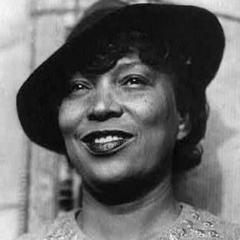
Zora Neale Hurston
Zora Neale Hurston (1891-1960) was an American anthropologist, folklorist, and novelist who played a pivotal role in the Harlem Renaissance. Born in Alabama and raised in Eatonville, Florida, she became the first African American student at Barnard College, Columbia University, studying under Franz Boas. Hurston is best known for her novel "Their Eyes Were Watching God," now considered a classic of American literature. She conducted extensive anthropological fieldwork in the American South and Caribbean, preserving African American folk traditions. Though largely forgotten after her death, her work was revived by Alice Walker in the 1970s, establishing her as a foundational figure in African American literature and anthropology. more
You May Also Like
Source: Dream Work
Source: The Rambler: In Four Volumes
Source: Selected essays
Source: The Lives of the Poets: A Selection
Source: The Rambler: In Four Volumes
Source: The Rambler
Source: The Rambler: A Periodical Paper, Published in 1750, 1751, 1752
Source: The Rambler: In Four Volumes