Quotessence
Home / Quotes / Quote by Marcus Vitruvius Pollio

Quote by Marcus Vitruvius Pollio

“From prescription, in the case of hypaethral edifices, open to the sky, in honor of Jupiter Lightning, the Heaven, the Sun, or the Moon: for these are gods whose semblances and manifestations we behold before our very eyes in the sky when it is cloudless and bright.”

Quote by Marcus Vitruvius Pollio

Author
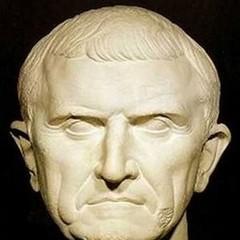
Marcus Vitruvius Pollio

Marcus Vitruvius Pollio, a renowned Roman architect, engineer, and writer, lived from 81 BC to 15 AD. He is considered one of the founders of Roman architecture and is best known for his work 'De Architectura', which has had a profound impact on the development of architecture throughout history. more

You May Also Like

“Dimension stone, flint, rubble, burnt or unburnt brick, use them as you find them. For it is not every neighborhood or particular locality that can have a wall built of burnt brick like that at Babylon, where there was plenty of asphalt to take the place of lime and sand, and yet possibly each may be provided with materials of equal usefulness so that out of them a faultless wall may be built to last forever.”

“Bricks will be most serviceable if made two years before using; for they cannot dry thoroughly in less time. When fresh undried bricks are used in a wall, the stucco covering stiffens and hardens into a permanent mass, but the bricks settle and the motion caused by their shrinking prevents them from adhering to it, and they are separated from their union with it. At Utica in constructing walls they use brick only if it is dry and made five years previously, and approved as such by the authority of a magistrate.”

“The stone in quarries is found to be of different and unlike qualities. In some it is soft, in others it is medium, in still others it is hard as in lava quarries. There are also numerous other kinds: for instance, in Campania, red and black tufas; in Umbria, Picenum, and Venetia, white tufa which can be cut with a toothed saw like wood.”

“All these soft kinds [of stone] have the advantage that they can be easily worked as soon as they have been taken from the quarries. Under cover, they play their part well; but in open and exposed situations the frost and rime make them crumble, and they go to pieces. On the seacoast, too, the salt eats away and dissolves them, nor can they stand great heat either.”