“I feel I should not be ... so at the mercy of people's regard. And yet - it is the artist's desire for communication too; without the answering voice you get so numb; you lose faith in your powers to communicate.”
Quote by Anne Morrow Lindbergh
Work
War within and without: diaries and letters of Anne Morrow Lindbergh, 1939-1944
Comprising diaries and letters, the book provides a glimpse into the life of Anne Morrow Lindbergh during the tumultuous years of 1939 to 1944. It captures her thoughts and emotions amidst the backdrop of World War II, offering a unique perspective on the period. more
Author
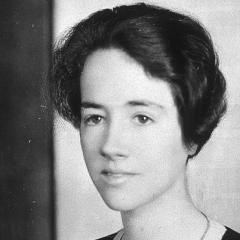
Anne Morrow Lindbergh
Anne Morrow Lindbergh was an accomplished American author known for her profound personal experiences and elegant literary style. Born on June 22, 1906, and passing away on February 7, 2001, she was not only Charles Lindbergh's wife but also an independent writer and thinker. Her writing career began in the 1930s, with works spanning novels, poetry, and prose. Her first book, 'We Are the Ship,' is a memoir about her life with her husband. Despite the challenges in her marriage, she remained passionate about life and writing. Her other notable works include 'Gift from the Sea' and 'The Aviator's Wife,' which delve into themes of female identity, marriage, and the deeper questions of human existence. Lindbergh's writing has been praised for its insightful observations and beautiful language. Her works have had a wide-reaching impact both in the United States and internationally, influencing subsequent writers and considered an important figure in 20th-century American literature. more
You May Also Like
Source: War within and without: diaries and letters of Anne Morrow Lindbergh, 1939-1944
Source: The wave of the future: a confession of faith
“Communication with another person -- wasn't it the realest thing in life?”
Source: Reader's digest condensed books
Source: BRING ME A UNICORN
“... writing letters is thinking, just as talking to you is thinking.”
Source: Locked rooms and open doors
Source: Locked rooms and open doors
Source: Locked rooms and open doors