Quotessence
Home / Quotes / Quote by Philip Kitcher

Quote by Philip Kitcher

“The moment in which the narrator, reaching for his boots, becomes vividly and lastingly aware of the finality of his grandmother's death is another such moment. It would be interesting to explore Proust's great novel from the perspective of seeing how stable synthetic complexes are formed and modified.”

Quote by Philip Kitcher

Author
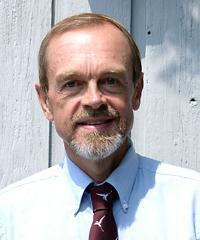
Philip Kitcher
Philip Kitcher

Philip Kitcher, born on February 20, 1947, is a philosopher, writer, and academic. His research interests are primarily in the fields of philosophy of science, epistemology, and moral philosophy. more

You May Also Like

“There are actually two separate issues here. The first is whether (as ancient philosophers and Nietzsche assume) only the privileged elite can live a worthwhile life. The second is whether it's possible to fulfill the roles of both serious artist and upstanding citizen. It seems to me that philosophy can dissect both questions, by delineating clearly the anatomy of the good life and the structural conditions of the roles.”

“I suspect that any worthwhile exploration of these deep questions about living requires going beyond abstract discussions to the vivid presentation of possibilities. If readers are to be prompted to serious examination of their lives, anatomy isn't enough. We have to be stimulated to imagine, in some detail, what it would be like to live in particular ways.”

“In the end, we learn about the most basic philosophical questions - like "How to live?" - from a broad mixture of sources, including literature and philosophy, history and anthropology. These sources can guide our reflections on our own experiences, as we explore and reconsider. Mann contributed to such explorations in a distinctive way, and I hope my book brings that out.”

“Even though I want to expand the number of ways in which skilful ironic play happens, I suspect I'm probably guilty of the same shortcoming - and I hope that, one of these days, someone will claim that my book, while it goes in a salutary expansive direction, doesn't go far enough, that there are assumptions I make that show I've missed aspects of Mann's irony and ambiguity.”