“Most people see the problem of love primarily as that of being loved, rather than that of loving, of one's capacity to love. Hence the problem to them is how to be loved, how to be lovable.”
Book:THE ART OF LOVING
“Most people see the problem of love primarily as that of being loved, rather than that of loving, of one's capacity to love. Hence the problem to them is how to be loved, how to be lovable.”
This book explores the complexities of love, offering insights into its nature, dynamics, and importance in human life. It delves into the psychological and emotional aspects of love, providing readers with tools and strategies to cultivate healthy and fulfilling relationships. more
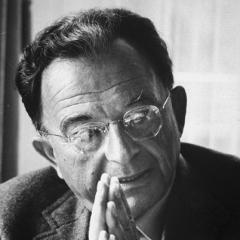
Erich Fromm, born on March 23, 1900 in Germany and died on March 18, 1980, was a renowned psychologist. His research covered a wide range of fields including anthropology, philosophy, and religion, particularly known for his studies on human psychology and interpersonal relationships. more
“Equality today means ‘sameness’, rather than ‘oneness’.”
“The meaning of our existence is not invented by ourselves, but rather detected.”
“The existential vacuum manifests itself mainly in a state of boredom.”
“The angels are lost in perpetual contemplation of an infinite glory.”