“...[sacred] doctrine is especially based upon arguments from authority, inasmuch as its principles are obtained by revelation: thus we ought to believe on the authority of those to whom the revelation has been made. Nor does this take away from the dignity of this doctrine, for although the argument from authority based on human reason is the weakest, yet the argument from authority based on divine revelation is the strongest.”
Quote by Thomas Aquinas
Work
The Summa Theologica: Complete Edition
Written by Thomas Aquinas, this book is a detailed treatise on Christian theology, encompassing topics such as God, the nature of the soul, and the moral life. It is considered a foundational text in the field of Catholic theology. more
Author
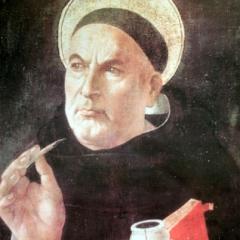
Thomas Aquinas
Thomas Aquinas, born on January 28, 1225 and died on March 7, 1274, was a renowned theologian, philosopher, and priest. He is considered one of the greatest theologians of the Middle Ages and his works have had a profound impact on philosophy and theology. more
You May Also Like
Source: Teachings of Mahatma Gandhi
Source: On Faith and Reason
Source: The Summa Theologica: Complete Edition
Source: Will Rogers' Daily Telegrams: The Hoover years, 1931-1933
“When man invented the bicycle he reached the peak of his attainments.”
Source: The Complete Books of Charles Fort
“I said some words to the close and holy darkness and then I slept.”
Source: Quite Early One Morning
“I do not in the least object to a sport because it is rough.”
Source: Works