Quotessence
Home / Quotes / Quote by Alan Ayckbourn

Quote by Alan Ayckbourn

“I think of a plot, I think of an idea, and then I wonder, How can I get that onto the stage? . . . Whatever devices you use should always be there to serve the theme. If the theme has been overtaken by the device, then something's wrong.”

Quote by Alan Ayckbourn

Author
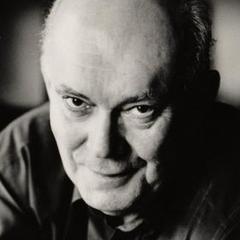
Alan Ayckbourn
Alan Ayckbourn

Alan Ayckbourn, born on April 12, 1939, is a renowned British playwright known for his unique humor and insightful dramatic vision. His works have won numerous awards and have been performed worldwide. more

You May Also Like

“I believe you shouldn't force the audience's interpretation of a character or a story. The more you explain things, the less intriguing and imaginable they are for viewers. . . . Film to me, in its essence, in its ultimate nature, is silent. Music and dialogue are there to fill what is lacking in the image. But you should be able to tell the story with moving pictures alone. For my next project, though, I'd like to make the kind of film where the characters blabber all the time.”

“The title's so upfront. It gives fair warning about the play's content. I'm writing about a kind of disenchantment, an anger, but quite a cool 90's anger, at a time when we're not very good at openly being angry. . . . I don't think I ever thought the title was titillating. I thought it was incredibly catchy. If the play is about the reduction in human relations down to a consumerist rationale, then thematically, the title is entirely linked into the thesis of the play.”

“[Action's] a Western thing. We think of the hero going into battle, rebelling against a government or an oppressor, but [in KUNDUN] action is nonaction or what appears to be nonaction. That's a hard concept for Western audiences. . . . We wanted to show a kind of moral action, a spiritual action, an emotional action. Some people will pick up on it; some won't.”

“The ideal time for writing a [television] script is four days, though sometimes it has to be two or three days depending on the deadline. If it's two days, sometimes there are things I see that don't work as well. If I have two weeks, the scripts get kind of flabby and lack the adrenaline that a sense of deadline fills you with.”

“Originally the structure was . . . a modern narrator who would appear intermittently and talk about his memories of his grandmother, which would then be juxtaposed against scenes from the past. But the stories from the past were always more interesting that the things in the present. I find this almost endemic to modern plays that veer between past and present. . . . So as we've gone on developing GOLDEN CHILD, the scenes from the past have become more dominant, and all that remains of the present are these two little bookends that frame the action.”