Quotessence
Home / Quotes / Quote by John Steinbeck

Quote by John Steinbeck

“In our time mass or collective production has entered our economics, our politics, even our religion, so that some nations have substituted the idea collective for the idea God. This in my time is the danger. There is great tension in the world, tension toward a breaking point, and men are unhappy and confused. At such a time it seems natural and good to me to ask myself these questions. What do I believe in? What must I fight for and what must I fight against?”

Quote by John Steinbeck

Work

East of Eden

John Steinbeck's 'East of Eden' is a profound and complex narrative that delves into the lives of the Joad family as they navigate the challenges of their time. The story is rich with symbolism and philosophical musings, offering a rich tapestry of human emotions and societal struggles. more

Author

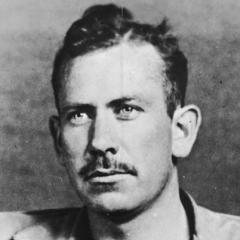
John Steinbeck
John Steinbeck

John Steinbeck was an American author renowned for his profound depiction of American society and the lives of farmers. His works often explore themes of poverty, social injustice, and human nature. Steinbeck was awarded the Nobel Prize in Literature in 1962 for his significant contribution to American literature. more

You May Also Like

“This is not to say that the race question is any nearer resolution in Brazil than anywhere else - simply that racist ideology faces a more difficult task in Brazil on account of the racial confusion and the range of race mixtures that exist there. Discrimination confronts a web of racial lines as unpredictable as the lines of the human palm. This invalidation of racism by virtue of the scattering of its object is far more subtle and effective than ideological struggle, whose ambiguity invariably revives the very problem it seeks to resolve. Racism will never end so long as it is combated frontally in terms of rational rebuttal. It can be defeated only through an ironic give-and-take founded precisely on racial differences: not at all through the legitimation of differences by legal means, but through an ultimately violent interaction grounded in seduction and voracity. One thinks of the Bishop of Pernambuco; one thinks of the words 'How good he was, my little Frenchman!' He is very good-looking, so he is sanctified - and eaten. He is granted something greater than the right to exist: the prestige of dying. If racism is a violent abreaction in response to the Other's seductive power (rather than to the Other's difference), it can surely be defused only by an increase in seductiveness itself. So many other cultures enjoy a more original situation than ours. For us everything is predictable: we have extraordinary analytical means but no situation to analyse. We live theoretically well beyond our own events: hence our deep melancholy. For others destiny still flickers: they live it, but it remains for them, in life as in death, something forever indecipherable. As for us, we have abolished 'elsewhere' . Cultures stranger than ours live in prostration (before the heavens, before destiny); we live in consternation (at the absence of destiny). Nothing can come from anywhere except from us. This is, in a way, the most absolute misfortune.”