“Similar (of course, far from identical) irritations in similar conditions call out similar reflexes; the more powerful the irritation, the sooner it overcomes personal peculiarities. To a tickle, people react differently, but to a red-hot iron, alike. As a steam-hammer converts a sphere and a cube alike into sheet metal, so under the blow of too great and inexorable events resistances are smashed and the boundaries of "individuality" lost.”
Quote by Leon Trotsky
Work
History of the Russian Revolution
A detailed exploration of the political and social events leading to and following the Russian Revolution. more
Author
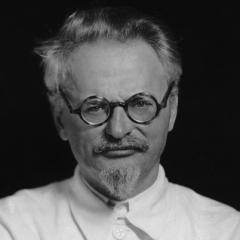
Leon Trotsky
Leon Trotsky was a Russian revolutionary, politician, and theorist, one of the key figures in Marxist theory. Born on November 7, 1879, and died on August 21, 1940. Trotsky played a significant role in the Russian Revolution, being one of the founders of the Bolshevik Party and a close comrade of Lenin. He was involved in the political struggles after the revolution and eventually fell out with Stalin, leading to his exile and eventual assassination. more
You May Also Like
Source: The Revolution Betrayed
Source: In Search of Lost Time, Volume III: The Guermantes Way
Source: Delphi Complete Works of Marcel Proust (Illustrated)
“Creation is not a hurdle on the road to God, it is the road itself.”
Source: Between Man and Man
Source: Whatcha Gonna Do With That Duck?: And Other Provocations, 2006-2012