Quotessence
Home / Quotes / Quote by Meher Baba

Quote by Meher Baba

“Irrespective of their birth labels and belief tables, my blessings to all those who feel themselves to be oppressed, depressed and suppressed from any cause whatsoever!”

Quote by Meher Baba

Author
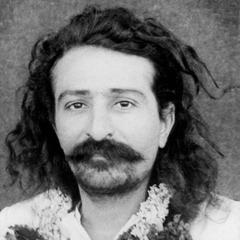
Meher Baba
Meher Baba

Meher Baba was a mystic and spiritual leader from India. His life was filled with mystery and legend, and he was considered a mentor with extraordinary abilities. Meher Baba's philosophy of life emphasizes inner spiritual growth and self-realization, and his teachings have had a profound impact on many people worldwide. more

You May Also Like

“All power has its derivation from God; the Russian Czar, however, was granted a special significance distinguishing him from the rest of the world's rulers…. He is a successor of the Caesars of the Eastern Empire,…the founders of the very creed of the Faith of Christ…. Herein lies the mystery of the deep distinction between Russia and all the nations of the world.”

“The real reason for Father Braganza's laughter was the history of Amrapur. It was a quaint town, nestled amidst barren mountains. The Hindus and Muslims living there were perpetually warring with each other, reacting violently at the slightest provocation. It had started a long time ago, this squabble, and had escalated into a terrible war. Some people say it started centuries ago, but many believe it started when the country gave one final, fierce shrug to rid itself of British rule. The shrug quickly became a relentless shuddering, and countless people were uprooted and flung into the air. Many didn't survive. Perhaps the mountains of Amrapur absorbed the deracinating wave. People weren't cruelly plucked from the town. They remained there, festering, becoming irate and harbouring murderous desires. And while the country was desperately trying to heal its near-mortal wounds and move on, Amrapur's dormant volcano erupted. Momentary and overlooked, but devastating. Leaders emerged on both sides and, driven by greed, they fed off the town's ignored bloodshed. They created ravines out of cracks, fostered hatred and grew richer. The Bhoite family, the erstwhile rulers of the ancient town, adopted the legacy of their British rulers---divide and conquer.”

“There is always a simple way of saying things," said Fafhrd ominously. "But there is where I differ with you," returned the adept, almost animatedly. "There are no ways of saying certain things, and others are so difficult that a man pines and dies before the right words are found. One must borrow phrases from the sky, words from beyond the stars. Else were all an ignorant, imprisoning mockery.”

“But Anra was far cleverer than I at reading. He loved letters as passionately as I did the outside. For him, they were alive. I remember shim showing me some Egyptian hieroglyphs and telling me that they were all animals and insects. And then he showed me some Egyptian hieratics and demotics and told me those were the same animals in disguise. But Hebrew, he said, was best of all, for each letter was a magic charm.”

“He could not help but admire his posters every time he saw them---the son of a rickshaw puller, now the chief of a prominent political party in this town, who was expected to win by an unprecedented margin of votes in the coming elections. There were many people in the party who begrudged his presence, his power, but they could do nothing. The people of Amrapur loved him and his speeches. Some people called them inflammatory, divisive, and harmful to the peace and harmony of the town. A smile spread across his face every time he heard that word. Has anything ever been achieved by harmony? What would the leaders do with harmony? Why would people come to listen to his speeches in droves if they wanted harmony? Elections can never be won by harmony.”

“A few autocracies still portray themselves to their citizens as model states. The North Koreans, famously, hold vast military parades with elaborate gymnastics displays and huge portraits of their leader, very much in the Stalinist style. But many of the propagandists of Autocracy, Inc., have learned from the mistakes of the twentieth century. They don’t offer their fellow citizens a vision of utopia, and they don’t inspire them to build a better world. Instead, they teach people to be cynical and passive, because there is no better world to build. Their goal is to persuade people to mind their own business, stay out of politics, and never hope for a democratic alternative: Our state may be corrupt, but everyone else is corrupt too. You may not like our leader, but the others are worse. You may not like our society, but at least we are strong and the democratic world is weak, degenerate, divided, dying.”

“In recent years various dictatorships--of both internal and external origin--have collapsed or stumbled when confronted by defiant, mobilized people." Those are the opening words of From Dictatorship to Democracy, an iconic pamphlet composed by Gene Sharp, an American academic. Sharp emerged from the world of pacifism, civil rights, and antiwar activism in the 1950s to become, by the 1990s, an advocate of nonviolent revolution. A student of Gandhi, King, and Thoreau, Sharp believed that dictatorships survive not because of the unusual powers or personalities of dictators but because most people who live under their rule are apathetic or afraid. He believed that if they overcame their apathy and fear, and that if they refused to acquiesce to the dictator's demands, then the dictator would no longer be able to rule.”