Quotessence
Home / Quotes / Quote by Charles Bukowski

Quote by Charles Bukowski

Work

The People Look Like Flowers at Last

Browse quotes and source details for this work. more

Author
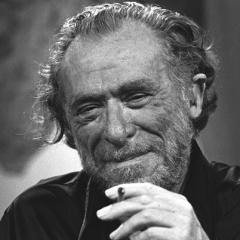
Charles Bukowski
Charles Bukowski

Charles Bukowski, born on August 16, 1920, was an influential American poet. Known for his unique style and profound depiction of the lives of the underclass in America, he is considered one of the representatives of the Beat Generation. more

You May Also Like

“Some choices are better than others and we, as mortal humans, cannot be expected to always choose the best ones. What we can control is how we evaluate past decisions. Our readiness to reflect and realize that we were wrong. Our ability to admit our wrongs and move forward. To say we are sorry or make amends for mistakes. To apply what we’ve learned from past follies and choose wiser in the present. I contend that in a random and often chaotic world of choices, that is what we can control.”

“Then they had grown. Edging into life from the back door. Becoming. Everybody in the world was in a position to give them orders. White women said, "Do this." White children said, "Give me that." White men said. "Come here." Black men said, "Lay down." The only people they need not take orders from were black children and each other. But they took all of that and re-created it in their own image. They ran the houses of white people, and knew it. When white men beat their men, they cleaned up the book and went home to receive abuse from the victim. They beat their children with one hand and stole for them with the other. The hangs that felled trees also cut umbilical cords; the hands that wrung the necks of chickens and butchered hogs also nudged African violets into bloom; the arms that loaded sheaves, bales, and sacks rocked babies into sleep. They patted biscuits into flaky ovals of innocence--and shrouded the dead. They plowed all day and came home to nestle like plums under the limbs of their men, The legs that straddled a mule's back were the same ones that straddled their men's hips. And the difference was all the difference there was.”

“She would begin to view them ... with greater objectivity; their need for her started to look like something less discriminating, more parasitical. She felt duped by them into believing herself to be generous, tireless, inspiring, when in fact she was just a self-sacrificing victim. It was this feeling that often brought her to a position of clarity about her own life. She would start to give them less and herself more: by draining her, they created in her a new capacity for selfishness.”

“In all our discussions and speculations we had always unconsciously assumed that the women, whatever else they might be, would be young. Most men do think that way, I fancy. "Woman" in the abstract is young, and, we assume, charming. As they get older they pass off the stage, somehow, into private ownership mostly, or out of it altogether. But these good ladies were very much on the stage, and yet any one of them might have been a grandmother. We looked for nervousness—there was none. For terror, perhaps—there was none. For uneasiness, for curiosity, for excitement—and all we saw was what might have been a vigilance committee of women doctors, as cool as cucumbers, and evidently meaning to take us to task for being there.”

“How odd it is that we judge a woman by her clothes and the place she eats lunch and the subjects she talks about with her colleagues on her coffee break, yet we don’t judge a man if he doesn’t grow his beard or if he works with women or speaks to them. Why do Saudi women allow subjugation to a man and adhere to men’s rules and conditions? Why did I?”