Quotessence
Home / Quotes / Quote by Thomas Szasz

Quote by Thomas Szasz

“As the dominant social ethic changed from a religious to a secular one, the problem of heresy disappeared, and the problem of madness arose and became of great social significance. In the next chapter I shall examine the creation of social deviants, and shall show that as formerly priests had manufactured heretics, so physicians, as the new guardians of social conduct and morality, began to manufacture madmen.”

Quote by Thomas Szasz

Author
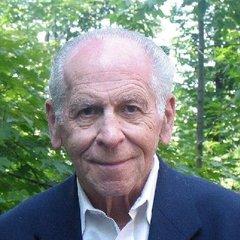
Thomas Szasz
Thomas Szasz

Thomas Szasz, born on April 15, 1920 in Hungary, was a renowned American psychiatrist, writer, and philosopher. He is known for his critical views on psychiatry and liberalism, particularly his skepticism about the nature of mental illness and his emphasis on individual freedom. more

You May Also Like

“We shall therefore compare the concept of homosexuality as heresy, prevalent in the days of the witch-hunts, with the concept of homosexuality as mental illness, prevalent today.”

“The Christian ethic did not raise the worth of female life much above the Jewish: nor did the clinical ethic raise it much above the clerical. This is why most of those identified as witches by male inquisitors were women; and why most of those diagnosed as hysterics by male psychiatrists were also women.”

“In English-speaking countries, the connection between heresy and homosexuality is expressed through the use of a single word to denote both concepts: buggery. ... Webster's Unabridged Dictionary (Third Edition) defines "buggery" as "heresy, sodomy.”

“There is a fundamental similarity between the persecution of individuals who engage in consenting homosexual activity in private, or who ingest, inject, or smoke various substances that alter their feelings and thoughts - and the traditional persecution of men for their religion... What all of these persecutions have in common is that the victims are harassed by the majority not because they engage in overtly aggressive or destructive acts... but because their conduct or appearance offends a group intolerant to and threatened by human differences.”

“As the base rhetorician uses language to increase his own power, to produce converts to his own cause, and to create loyal followers of his own person - so the noble rhetorician uses language to wean men away from their inclination to depend on authority, to encourage them to think and speak clearly, and to teach them to be their own masters.”

“Like Karl Kraus [Wittgenstein], was seldom pleased by what he saw of the institutions of men, and the idiom of the passerby mostly offended his ear - particularly when they happened to speak philosophically; and like Karl Kraus, he suspected that the institutions could not but be corrupt if the idiom of the race was confused, presumptuous, and vacuous, a fabric of nonsense, untruth, deception, and self-deception.”