Quotessence
Home / Quotes / Quote by Ernest Renan

Quote by Ernest Renan

Work

Philosophical Dialogues and Fragments

This book compiles a series of dialogues and fragments that delve into the depths of philosophical inquiry, offering readers a glimpse into the thoughts and debates of philosophers on a wide range of topics. more

Author
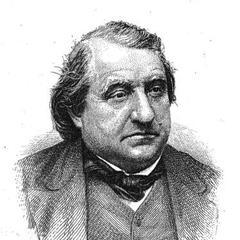
Ernest Renan
Ernest Renan

Ernest Renan was a French philosopher, historian, and critic, known for his work on the philosophy of history and his influential book 'The Life of Jesus'. His ideas significantly influenced the study of religion and the understanding of Jesus Christ. more

You May Also Like

“Modern life means democracy, democracy means freeing intelligence for independent effectivenessthe emancipation of mind as an individual organ to do its own work. We naturally associate democracy, to be sure, with freedom of action, but freedom of action without freed capacity of thought behind it is only chaos.”

“A person who is trained to consider his actions, to undertake them deliberately, is in so far forth disciplined. Add to this ability a power to endure in an intelligently chosen course in the face of distraction, confusion, and difficulty, and you have the essence of discipline.”

“The path of least resistance and least trouble is a mental rut already made. It requires troublesome work to undertake the alternation of old beliefs. Self-conceit often regards it as a sign of weakness to admit that a belief to which we have once committed ourselves is wrong. We get so identified with an idea that it is literally a pet notion and we rise to its defense and stop our eyes and ears to anything different.”

“In laying hands upon the sacred ark of absolute permanency, in treating the forms that had been regarded as types of fixity and perfection as originating and passing away, the Origin of Species introduced a mode of thinking that in the end was bound to transform the logic of knowledge, and hence the treatment of morals, politics, and religion.”

“The good society was, like the good self, a diverse yet harmonious, growing yet unified whole, a fully participatory democracy in which the powers and capacities of the individuals that comprised it were harmonized by their cooperative activities into a community that permitted the full and free expression of individuality.”

“The most perfect political community must be amongst those who are in the middle rank, and those states are best instituted wherein these are a larger and more respectable part, if possible, than both the other; or, if that cannot be, at least than either of them separate.”