Quotessence
Home / Quotes / Quote by Vito Acconci

Quote by Vito Acconci

“What connects architecture and music is that neither one is really an object. It's more like an ambience, a surrounding and a context. You can do other things while you're listening to music and of course, you can do other things while you're in the middle of architecture. The notion of multi-attention seems to me like it's the keynote to the beginning of the 21st century.”

Quote by Vito Acconci

Author
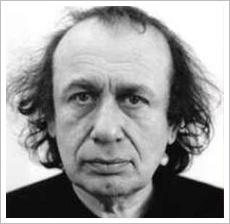
Vito Acconci
Vito Acconci

Vito Acconci (January 24, 1940 – April 28, 2017) was an American designer, performance artist, and architect. He first gained fame for his provocative performance and conceptual art, later transitioning to architecture and design, founding Acconci Studio. His work blurs the lines between art and architecture, emphasizing the interaction between space and the body. Key works include 'Seedbed' and 'Following Piece.' Acconci is considered a pioneer in public art and experimental architecture, influencing generations of artists and designers. more

You May Also Like

“I like intersections. They're the nature of New York, and there's always the possibility that when you're at one you can meet someone new. Have I ever met anyone new at an intersection? No, but I like the idea of it. I like cities because if you're stopping on the corner to wait for a light to change, there's the possibility that you and somebody else can talk. And if you and that somebody else start to talk, then you can start to argue, and if you start to argue, you might start a revolution.”

“It was an incredible way to grow up, because words that you're taught - these definite things - you realize they sort of beautifully fall apart; that words are tenuous. In the middle of a large word, there's a small word that possibly contradicts the larger word. So I grew up where, on the one hand, the only thing I would ever think of doing was something in writing, music, or art, and on the other hand, I could've reacted strongly against it because it would've been a way to rebel.”

“I always thought, I can't waste time, I have to do work. I also thought that I was slower than other people, that I had to concentrate more. I always thought, I'm not brilliant, I have to work. That was something I embedded in myself very early: I have to go home and write. But did I get any more work done than people like Frank O'Hara, who were always going to parties? Probably not.”

“Maybe I can pull at my breast in a kind of futile attempt to develop a woman's breast. It's not that simple to become a woman. But I think what was important, when I think back on that work, is something like The Little Engine That Could. It's me saying, I think I can, I think I can. Though I'm doing something I obviously can't, it's the process toward it that is important. The will toward it, the effort . . . My work was about getting to a place that you couldn't get to.”

“Why was I in a basement saying, "I'm alone here," wielding a lead pipe and crowbars? It was like I was doing the Vietnam War. It was like I was being America. If I put a blindfold on, I can't see you as people, which seemed to be what the United States was doing. I mean, it was important for people in my generation, because I grew up in the '40s, at a time when America was supposedly the hero nation. America saved Europe. And, some years later, we realized, America is a criminal.”