Quotessence
Home / Quotes / Quote by Victor Hugo

Quote by Victor Hugo

“No matter who you are, the thought of so much suffering and degradation must cause you to shudder at the sight of a veil or cassock, those two shrouds of human invention.”

Quote by Victor Hugo

Work

Les Misérables

Victor Hugo's 'Les Misérables' is an epic narrative that delves into the lives of various characters, including Jean Valjean, a former convict seeking redemption, and Fantine, a woman struggling in poverty. The story is rich in historical detail and moral complexity, offering a profound examination of society's flaws and the resilience of the human spirit. more
Author

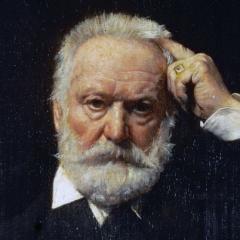
Victor Hugo
Victor Hugo

Victor Hugo, a French romantic poet, novelist, and playwright, was born on February 26, 1802, and died on May 22, 1885. He is considered one of the greatest writers in French literary history, known for his profound humanistic concerns and rich imagination. more

You May Also Like

“Nothing is so convenient as a decisive argument ... which must at least silence the most arrogant bigotry and superstition, and free us from their impertinent solicitations. I flatter myself, that I have discovered an argument ... which, if just, will, with the wise and learned, be an everlasting check to all kinds of superstitious delusion, and consequently, will be useful as long as the world endures. For so long, I presume, will the accounts of miracles and prodigies be found in all history, sacred and profane.”

“I say then, that belief is nothing but a more vivid, lively, forcible, firm, steady conception of an object, than what the imagination alone is ever able to attain. This variety of terms, which may seem so unphilosophical, is intended only to express that act of the mind, which renders realities, or what is taken for such, more present to us than fictions, causes them to weigh more in the thought, and gives them a superior influence on the passions and imagination.”

“It is wrong for a man to say that he is certain of the objective truth of any proposition unless he can produce evidence which logically justifies that certainty. This is what Agnosticism asserts; and, in my opinion, it is all that is essential to Agnosticism. That which Agnostics deny and repudiate, as immoral, is the contrary doctrine, that there are propositions which men ought to believe without logically satisfactory evidence; and that reprobation ought to attach to the profession of disbelief in such inadequately supported propositions.”