Quotessence
Home / Quotes / Quote by Ecumenical Patriarch Bartholomew I of Constantinople

Quote by Ecumenical Patriarch Bartholomew I of Constantinople

Author
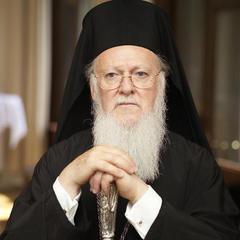
Ecumenical Patriarch Bartholomew I of Constantinople

Ecumenical Patriarch Bartholomew I of Constantinople, born on February 29, 1940, is the current Archbishop of the Ecumenical Patriarchate. His tenure began in 2004, and he has been committed to promoting unity and peace within the global Christian community. more

You May Also Like

“Unless we look at a person and see the beauty there is in this person, we can contribute nothing to him. One does not help a person by discerning what is wrong, what is ugly, what is distorted. Christ looked at everyone he met, at the prostitute, at the thief, and saw the beauty hidden there. Perhaps it was distorted, perhaps damaged, but it was beauty none the less, and what he did was to call out this beauty.”

“To abandon the struggle for private happiness, to expel all eagerness of temporary desire, to burn with passion for eternal things-this is emancipation, and this is the free man's worship... United with his fellow men by the strongest of all ties, the tie of a common doom, the free man finds that a new vision is with him always, shedding over every daily task the light of love.”

“People should not worry as much about what they do but rather about what they are. If they and their ways are good, then their deeds are radiant. If you are righteous, then what you do will also be righteous. We should not think that holiness is based on what we do but rather on what we are, for it is not our works which sanctify us but we who sanctify our works.”

“In his (Christ's) surrender on the cross all the pain and agony of mankind was concentrated at a single point, and passed through from death to immortality, There is no pain of any creature from the beginning to the end of time which was not 'known' at this point and thus transmuted. To know all things in the Word is thus to know all the suffering of the world transfigured by the resurrection, somehow reconciled and atoned in eternal life. It was God's purpose which he set forth in Christ as a plan for the fullness of time, to unite all things in him, things on heaven and things on earth'.”