Quotessence
Home / Quotes / Quote by David Richo

Quote by David Richo

“If closeness was associated with danger in the past, it may remain so as a post-traumatic stress reaction. The fear of closeness and engulfment is subtle and long-lived; we are only released from it when we work through it and practice overriding it again and again. We do this when we allow the other person to direct our love rather than controlling how much or in what way we show it. To let go of control that way is terrifying to someone who fears closeness.”

Quote by David Richo

Work

亲密关系的重建

Browse quotes and source details for this work. more

Author

David Richo
David Richo

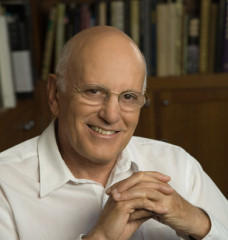
David Richo is an American writer born in 1940. His works primarily focus on personal growth, spiritual cultivation, and interpersonal relationships, which are well-received by readers. more

You May Also Like

“I asked a Catholic friend who kindly offered to ask several Catholic theologians if it was okay to fantasize about Jesus having sex with the Virgin Mary in all the positions of the Kama Sutra. They agreed to debate the topic and came up with this unanimous conclusion: Cognitive flooding would be okay if the goal was healing and not entertainment.”

“Behind the subconscious mind is the superconscious mind. The power of God within you, the power of limitless control, lies in the superconscious mind. That mind cannot be suggested with failure, but it can be eclipsed by the suggestion of failure. The superconscious mind is the all-knowing intuitive consciousness of the soul. That mind can be tapped in deep concentration and in soul-contact in meditation.”

“...he realized they had stumbled upon the gravest and most costly public health issue in the [US]: child abuse. He had calculated that its overall costs exceeded those of cancer or heart disease and that eradicating child abuse in America would reduce the overall rate of depression by more than half, alcoholism by two-thirds, and suicide, IV drug use, and domestic violence by three quarters. It would also have a dramatic effect on workplace performance and vastly decrease the need for incarceration.”

“Your book humanizes the addict,' many readers have told me. That acknowledgement reflects a fundamental and common misperception. Addicts *are* human. What keeps many of us from seeing that? It is only the habit of our egocentric mind that divides the world into 'us' and 'them.' More precisely, it is our inability-or refusal-to see the *us* in 'them' and the *them* in what we take to be 'us.' Such failure of imagination is seen in every realm, from personal relationships to international politics. Simply put, it reflects that clinging to identity that is our way of belonging to a group. And if we identify with a group of any dimension narrower than all humanity, there must then be *others* who, by definition, do *not* belong and to whom, we may believe at least unconsciously, we are superior. That superiority makes us feel entitled to judge, and to remain indifferent.”