Quotessence
Home / Quotes / Quote by Plato

Quote by Plato

“... the community suffers nothing very terrible if its cobblers are bad and become degenerate and pretentious; but if the Guardians of its laws and constitution, who alone have the opportunity to bring it good government and prosperity, become a mere sham, then clearly it is completely ruined.”

Quote by Plato

Author
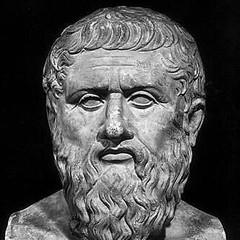
Plato
Plato

Plato (428 BC - 348 BC) was a prominent Greek philosopher, one of the most influential figures in Western philosophy. He founded the Academy, which was the first institution of higher education in the Western world. Plato's philosophy, centered around the theory of Forms, emphasized the importance of reason and morality. more

You May Also Like

“Their military training will ensure success in war, but they must maintain unity by not allowing the state to grow to large, and by ensuring that the measures for promotion and demotion from one class to another are carried out. Above all they must maintain the educational system unchanged; for on education everything else depends, and it is an illusion to imagine that mere legislation without it can effect anything of consequence.”

“The State which we have founded must possess the four cardinal virtues of wisdom, courage, discipline and justice ... Justice is the principle which has in fact been followed throughout, the principle of one man one job, of minding one s own business , in the sense of doing the job for which one is naturally fitted and not interfering with other people.”

“What the expression is intended to mean, I think, is that there is a better and a worse element in the character of each individual, and that when the naturally better element controls the worse then the man is said to be "master of himself", as a term of praise. But when - as a result of bad upbringing or bad company one s better element is overpowered by the numerical superiority of one s worse impulses, then one is criticized for not being master of oneself and for lack of self control.”

“Because, unlike courage and wisdom, which made our state brave and wise by being present in a particular part of it, discipline operates by being diffused throughout the whole of it. It produces a concord between its strongest and weakest and middle elements, whether you define them by the standard of good sense, or of strength, or of numbers or money or the like. And so we are quite justified in regarding discipline as this sort of natural harmony and agreement between higher and lower about which of them is to rule in state and individual.”

“Justice in the individual is now defined analogously to justice in the state. The individual is wise and brave in virtue of his reason and spirit respectively: he is disciplined when spirit and appetite are in proper subordination to reason. He is just in virtue of the harmony which exists when all three elements of the mind perform their proper function and so achieve their proper fulfillment; he is unjust when no such harmony exists.”