Quotessence
Home / Quotes / Quote by Azar Nafisi

Quote by Azar Nafisi

Work

Reading Lolita in Tehran: A Memoir in Books

In this memoir, the author reflects on her personal journey of discovering books and the profound impact they had on her life in Tehran, Iran. The narrative delves into the significance of reading forbidden literature during a time of political and social upheaval. more

Author
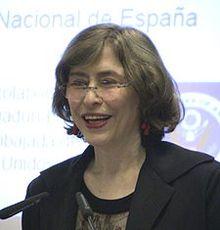
Azar Nafisi
Azar Nafisi

Azar Nafisi is an Iranian-born American writer and scholar, renowned for her experiences during the Islamic Revolution in Iran and her work 'Reading Lolita in Tehran'. She taught English literature at the University of Tehran and was forced to leave Iran after the revolution. Nafisi later moved to the United States and earned a Ph.D. from Georgetown University. more

You May Also Like

“Yes, of course," she said, the words rushing out. "You're defending your country." She opened her mouth again, then bit her lip. "Go on," he said. "Ask what you wanted to ask. I don't bite." "Well, I suppose I just wondered whether you had... whether you had actually ever killed anyone." He laughed. "You know, you do seem much younger than sixteen," he said. "But in answer to your question- yes, I have. More than one." He stopped. There was a new, dark look in his eyes when he continued. "You can't imagine what it's like. The Libyan heat sticking to you, day in, day out. Nothing but sand and rock for miles. Not a bit of green. All day, crawling in the dust, shooting and being shot at. Men dying around you. You realize, when you see a person die, that there's nothing special about humans. We're just flesh and blood and organs, no different to the pig that have us this bacon. "So, all day, dust, death, everywhere. I went to sleep each night with dust in my mouth and the smell of blood in my nose. Even here- I'm still finding dust on me. Under my nails, in my hair, caked into the soles of my shoes. And I can still smell the blood. All so that some English girl, sitting pretty in her father's manor house, can ask me if I ever killed anyone.”

“Stop making dubious literature about the Berbers and the old Iberians and admit that you have liked to kill as all who are soldiers by choice have enjoyed it at some time whether they lie about it or not. Anselmo does not like to because he is a hunter, not a soldier. Don't idealize him either. Hunters kill animals and soldiers kill men. Don't lie to yourself, he thought. Nor make up literature about it. You have been tainted with it for a long time now.”

“But there was no lift or any excitement in his heart. That was all gone and there was nothing but a calmness. And now, as he crouched behind the marker stone with the looped wire in his hand and another loop of it around his wrist and the gravel beside the road under his knees he was not lonely nor did he feel in any way alone. He was one with the wire in his hand and one with the bridge, and one with the charges the Inglés had placed. He was one with the Inglés still working under the bridge and he was one with all of the battle and with the Republic.”

“The future possibilities of space-travel, which are now left mainly to unfounded fantasy, could be more soberly treated without ceasing to be interesting and could show to even the most adventurous of the young that a world without war need not be a world without adventurous and hazardous glory. To this kind of contest there is no limit. Each victory is only a prelude to another, and no boundaries can be set to rational hope.”