Quotessence
Home / Authors / Bertrand Russell
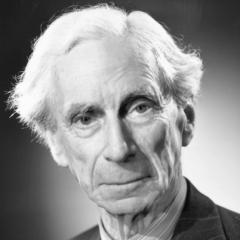
Bertrand Russell

Bertrand Russell Quotes

Philosopher

Filter quotes by topic

Famous Bertrand Russell Quotes

“I have been accused of a habit of changing my opinions. I am not myself in any degree ashamed of having changed my opinions. What physicist who was already active in 1900 would dream of boasting that his opinions had not changed during the last half century? In science men change their opinions when new knowledge becomes available; but philosophy in the minds of many is assimilated rather to theology than to science. The kind of philosophy that I value and have endeavoured to pursue is scientific, in the sense that there is some definite knowledge to be obtained and that new discoveries can make the admission of former error inevitable to any candid mind. For what I have said, whether early or late, I do not claim the kind of truth which theologians claim for their creeds. I claim only, at best, that the opinion expressed was a sensible one to hold at the time when it was expressed. I should be much surprised if subsequent research did not show that it needed to be modified. I hope, therefore, that whoever uses this dictionary will not suppose the remarks which it quotes to be intended as pontifical pronouncements, but only as the best I could do at the time towards the promotion of clear and accurate thinking. Clarity, above all, has been my aim.”

“If [a man] spent his money, say, in giving parties for his friends, they (we may hope) would get pleasure, and so would all those upon whom he spent money, such as the butcher, the baker, and the bootlegger. But if he spends it (let us say) upon laying down rails for surface cars in some place where surface cars turn out not to be wanted, he has diverted a mass of labor into channels where it gives pleasure to no one. Nevertheless, when he becomes poor through failure of his investment he will be regarded as a victim of undeserved misfortune, whereas the gay spendthrift, who has spent his money philanthropically, will be despised as a fool and a frivolous person.”

“When you come to look into this argument from design, it is a most astonishing thing that people can believe that this world, with all the things that are in it, with all its defects, should be the best that omnipotence and omniscience have been able to produce in millions of years. I really cannot believe it. Do you think that, if you were granted omnipotence and omniscience and millions of years in which to perfect your world, you could produce nothing better than the Ku Klux Klan or the Fascists? Moreover, if you accept the ordinary laws of science, you have to suppose that human life and life in general on this planet will die out in due course: it is a stage in the decay of the solar system; at a certain stage of decay you get the sort of conditions of temperature and so forth which are suitable to protoplasm, and there is life for a short time in the life of the whole solar system. You see in the moon the sort of thing to which the earth is tending -- something dead, cold, and lifeless.”

“If the ordinary wage-earner worked four hours a day, there would be enough for everybody and no unemployment -- assuming a certain very moderate amount of sensible organization. This idea shocks the well-to-do, because they are convinced that the poor would not know how to use so much leisure. In America men often work long hours even when they are well off; such men, naturally, are indignant at the idea of leisure for wage-earners, except as the grim punishment of unemployment; in fact, they dislike leisure even for their sons.”

“Love is something far more than desire for sexual intercourse; it is the principal means of escape from the loneliness which afflicts most men and women throughout the greater part of their lives. There is a deep-seated fear, in most people, of the cold world and the possible cruelty of the herd; there is a longing for affection, which is often concealed by roughness, boorishness or a bullying manner in men, and by nagging and scolding in women. Passionate mutual love while it lasts puts an end to this feeling; it breaks down the hard walls of the ego, producing a new being composed of two in one.”

“Nobody really worries much about what is going to happen millions of years hence. Even if they think they are worrying about that, they are really deceiving themselves. They are worried about something much more mundane, or it may merely be a bad digestion; but nobody is really seriously rendered unhappy by the thought of something that is going to happen to this world millions and millions of years hence. Therefore, although it is of course a gloomy view to suppose that life will die out -- at least I suppose we may say so, although sometimes when I contemplate the things that people do with their lives I think it is almost a consolation -- it is not such as to render life miserable. It merely makes you turn your attention to other things.”

“The value of philosophy is, in fact, to be sought largely in its very uncertainty. The man who has no tincture of philosophy goes through life imprisoned in the prejudices derived from common sense, from the habitual beliefs of his age or his nation, and from convictions which have grown up in his mind without the co-operation or consent of his deliberate reason. To such a man the world tends to become definite, finite, obvious; common objects rouse no questions, and unfamiliar possibilities are contemptuously rejected. As soon as we begin to philosophize, on the contrary, we find, as we saw in our opening chapters, that even the most everyday things lead to problems to which only very incomplete answers can be given….”

“How, in such an alien and inhuman world, can so powerless a creature as man preserve his aspirations untarnished? A strange mystery it is that nature, omnipotent but blind, in the revolutions of her secular hurryings through the abysses of space, has brought forth at last a child, subject still to her power, but gifted with sight, with knowledge of good and evil, with the capacity of judging all the works of his unthinking mother. In spite of death, the mark and seal of the parental control, man is yet free, during his brief years, to examine, to criticize, to know, and in imagination to create. To him alone, in the world with which he is aquainted, this freedom belongs; and in this lies his superiority to the resistless forces that control his outward life.”

“The romantic movement, in art, in literature, and in politics, is bond up with this subjective way of judging men, not as members of a community, but as aesthetically delightful objects of contemplation. Tigers are more beautiful than sheep, but we prefer them behind bars. The typical romantic removes the bars and enjoys the magnificent leaps with which the tiger annihilates the sheep. He exhorts men to imagine themselves tigers, and when he succeeds the results are not wholly pleasant.”

“In our own day, there has been too much of a tendency towards authority, and too little care for the preservation of initiative. Men in control of vast organisations have tended to be too abstract in their outlook, to forget what actual human beings are like, and to try to fit men to systems rather than systems to men.”

“There is another more psychological obstacle to the full development of love in the modern world, and that is the fear that many people feel of not preserving their individuality in tact. This is a foolish and rather modern terror. Individuality is not an end in itself; it is something that must enter into fructifying contact with the world, and in so doing must lose its separateness. An individuality which is kept in a glass case withers, whereas on e that is freely expended in human contacts becomes enriched.”

“Message to the Future (1959) - Bertrand Russel “I should like to say two things, one intellectual and one moral. The intellectual thing I should want to say is this: When you are studying any matter, or considering any philosophy, ask yourself only what are the facts and what is the truth that the facts bear out. Never let yourself be diverted either by what you wish to believe, or by what you think would have beneficent social effects if it were believed. But look only, and solely, at what are the facts. That is the intellectual thing that I should wish to say. The moral thing I should wish to say… I should say love is wise, hatred is foolish. In this world which is getting more closely and closely interconnected we have to learn to tolerate each other, we have to learn to put up with the fact that some people say things that we don’t like. We can only live together in that way and if we are to live together and not die together we must learn a kind of charity and a kind of tolerance which is absolutely vital to the continuation of human life on this planet.” “The good life is one inspired by love and guided by knowledge.”

“Однако существует довод и более общего характера против слепого преклонения перед греками или кем бы то ни было еще. Правильное отношение к изучению того или иного философа состоит не в том, чтобы почитать или презирать его, но прежде всего в некоторого рода предрасположенности, дающей возможность понять, что именно склоняет к тому, чтобы верить в его теории, и только потом следует оживлять критическое отношение, которое должно напоминать, насколько это возможно, состояние ума той личности, которая отбрасывает мнения, отстаиваемые ею прежде. Презрение мешает первой части этого процесса, преклонение – второй. Следует при этом учитывать две вещи: надо помнить, что человек, чьи взгляды и теории заслуживают изучения, должен, по-видимому, обладать определенным умом, но надо также иметь в виду, что ни один человек не достигал, вероятно, полной и окончательной истины по какому бы то ни было вопросу. Когда умный человек выражает совершенно абсурдный с нашей точки зрения взгляд, мы не должны пытаться доказывать, что этот взгляд тем не менее является правильным, но нам следует попытаться понять, каким образом этот взгляд когда-то казался правильным. Это упражнение исторического и психологического воображения одновременно и расширяет сферу нашего мышления, и помогает нам понять, насколько глупыми многие из лелеемых нами предрассудков покажутся веку, обладающему другим складом ума.”

“Это не вина психологии романтиков, это их стандарт ценностей. Они восхищаются сильными страстями, безразлично какого рода и каковы бы ни были их социальные последствия. Романтическая любовь, особенно когда она несчастлива, достаточно сильна, чтобы заслужить их одобрение, но большинство сильнейших страстей разрушительно: ненависть, негодование и ревность, раскаяние и отчаяние, поруганная гордость и ярость несправедливо притесняемого, воинственный пыл и презрение к рабам и трусам. Следовательно, тип человека, поддерживаемый романтизмом, особенно в его байроновском варианте, – это склонный к насилию и антисоциальный, анархический бунтарь или побеждающий деспот. Причины того, что это мировоззрение обладает притягательной силой, лежат очень глубоко в природе человека и условиях его существования. Из чувства самосохранения человек стал стадным существом, но инстинктивно он остается в очень большой степени одиночкой; следовательно, необходимы религия и мораль, чтобы подкрепить этот инстинкт. Но привычка воздерживаться от удовольствий в настоящем ради преимуществ в будущем утомительна, и когда возбуждаются страсти, трудно держать себя в благоразумных рамках общественного поведения. Те, кто в такие моменты отбрасывает их, приобретают новую энергию и ощущение силы от прекращения внутреннего конфликта, и, хотя в конце концов они могут попасть в беду, они наслаждаются чувством божественной экзальтации, которое, хотя известно великим мистикам, никогда не может быть испытано теми, чье поведение не выходит за рамки прозаической добродетели. Индивидуалистическая сторона их природы утверждает себя, но, если сохраняется интеллект, это утверждение должно облекать себя в миф. Мистик пребывает наедине с Богом и, созерцая бесконечное, чувствует себя свободным от обязанностей по отношению к своему ближнему.”

“Бунт индивидуалистических инстинктов против социальных уз является ключом к пониманию философии, политики и чувств – не только того, что обычно называется движением романтизма, но и его последователей вплоть до наших дней. Философия под влиянием немецкого идеализма стала солипсистской, и самоусовершенствование было провозглашено основополагающим принципом этики. Что касается чувства, то должен был существовать неприятный компромисс между стремлением к изоляции и необходимостью удовлетворения страсти и экономических потребностей. В рассказе Д. Г. Лоуренса «Человек, который любил острова» герой постепенно все в большей степени пренебрегает таким компромиссом и в конце концов умирает от голода и холода, но наслаждаясь полной изоляцией. Однако такой последовательности не достигли писатели, которые превозносят одиночество. Отшельник не пользуется удобствами цивилизованной жизни, и человек, который хочет писать книги или создавать произведения искусства, должен принять помощь других, для того чтобы поддержать свое существование в то время, когда он работает. Для того чтобы продолжать чувствовать себя в одиночестве, он должен быть в состоянии предотвратить тех, кто служит ему, от покушения на его Я, что лучше всего достигается, если они являются рабами. Страстная любовь, однако, более сложное дело. Поскольку страстные любовники рассматриваются как люди, которые восстали против социальных оков, ими восхищаются. Но в реальной жизни отношения любви сами быстро становятся социальными оковами и партнера по любви начинают ненавидеть, и все более неистово, если любовь достаточно сильна, чтобы сделать узы такими, что их трудно разорвать. Следовательно, любовь начинают представлять как борьбу, в которой каждый стремится уничтожить другого, проникая сквозь защитительные барьеры его или ее Я. Эта точка зрения становится обычной в произведениях Стриндберга и еще больше Д. Г. Лоуренса.”

“Движение романтизма, в сущности, ставило целью освобождение человеческой личности от пут общественных условностей и общественной морали. В частности, эти путы были лишь бесполезным препятствием к желательным формам деятельности, так как каждая древняя община выработала правила поведения, относительно которых нечего сказать, кроме того, что они традиционны. Но эгоистические страсти, однажды освобожденные, нелегко снова подчинить интересам общества. Христианство имело определенный успех в усмирении «Я». Но экономические, политические и интеллектуальные причины стимулировали мятеж против церкви, а движение романтизма перенесло мятеж в сферу морали. Поощрения нового, ничем не ограниченного «Я» ясно делали общественную кооперацию невозможной и поставили его последователей перед альтернативой анархии или деспотизма. Эгоизм поначалу заставлял людей ожидать от других отеческой нежности. Но, когда они открыли с негодованием, что другие имеют свое собственное Я, разочарованное желание нежности обратилось в ненависть и насилие. Человек – не одиночное животное, и, поскольку существует общественная жизнь, самоутверждение не может быть высшим принципом этики.”

“Со своей стороны, я предпочитаю онтологическое доказательство [существования Бога], космологическое доказательство и остальной старый запас аргументов той сентиментальной нелогичности, которая берет начало от Руссо. Старые доказательства были по крайней мере честными; если они правильные, то они доказывали свою точку зрения, если они неправильные, то для любой критики доступно доказать это. Но новая теология сердца отказывается от доказательства; она не может быть отвергнута, потому что она не претендует на доказательство своей точки зрения. В конечном счете единственным основанием для ее принятия оказывается то, что она позволяет нам предаваться приятным грезам. Это не заслуживающая уважения причина, и, если бы я выбирал между Фомой Аквинским и Руссо, я выбрал бы Фому Аквинского.”

“Следует признать, что имеется определенный тип христианской этики, к которому осуждающая критика Ницше может быть применена справедливо. Паскаль и Достоевский, которых он сам приводит в качестве примера, – оба имеют что-то жалкое в своей добродетели. Паскаль принес в жертву своему Богу великолепный математический ум, тем самым приписывая Богу жестокость, которая является космическим расширением болезненных душевных мук самого Паскаля. Достоевский не желал иметь ничего общего с «личной гордостью»; он согрешил бы, чтобы покаяться и испытать наслаждение исповеди. Я не стану обсуждать вопрос, насколько в таких помрачениях ума следует обвинять христианство, но я согласен с Ницше, считая прострацию Достоевского презренной. Я должен согласиться и с тем, что прямота и гордость и даже некоторое самоутверждение являются элементами самого лучшего характера. Нельзя восхищаться добродетелью, в основе которой лежит страх.”

“What I Have Lived For Three passions, simple but overwhelmingly strong, have governed my life: the longing for love, the search for knowledge, and unbearable pity for the suffering of mankind. These passions, like great winds, have blown me hither and thither, in a wayward course, over a great ocean of anguish, reaching to the very verge of despair. I have sought love, first, because it brings ecstasy - ecstasy so great that I would often have sacrificed all the rest of life for a few hours of this joy. I have sought it, next, because it relieves loneliness--that terrible loneliness in which one shivering consciousness looks over the rim of the world into the cold unfathomable lifeless abyss. I have sought it finally, because in the union of love I have seen, in a mystic miniature, the prefiguring vision of the heaven that saints and poets have imagined. This is what I sought, and though it might seem too good for human life, this is what--at last--I have found. With equal passion I have sought knowledge. I have wished to understand the hearts of men. I have wished to know why the stars shine. And I have tried to apprehend the Pythagorean power by which number holds sway above the flux. A little of this, but not much, I have achieved. Love and knowledge, so far as they were possible, led upward toward the heavens. But always pity brought me back to earth. Echoes of cries of pain reverberate in my heart. Children in famine, victims tortured by oppressors, helpless old people a burden to their sons, and the whole world of loneliness, poverty, and pain make a mockery of what human life should be. I long to alleviate this evil, but I cannot, and I too suffer. This has been my life. I have found it worth living, and would gladly live it again if the chance were offered me.”

“The evils of life spring partly from natural causes, partly from men’s hostility to each other. In former times, competition and war were necessary for the securing of food, which could only be obtained by the victors. Now, owing to the mastery of natural forces which science has begun to give, there would be more comfort and happiness for all if all devoted themselves to the conquest of Nature rather than of each other. The representation of Nature as a friend, and sometimes as even an ally in our struggles with other men, obscures the true position of man in the world, and diverts his energies from the pursuit of scientific power, which is the only fight that can bring long-continued well-being to the human race.”

“You all know the argument from design: everything in the world is made just so that we can manage to live in the world, and if the world was ever so little different, we could not manage to live in it. That is the argument from design. It sometimes takes a rather curious form; for instance, it is argued that rabbits have white tails in order to be easy to shoot. I do not know how rabbits would view that application.”

“The principle we are examining may be called the principle of induction, and its two parts may be stated as follows: (a) When a thing of a certain sort A has been found to be associated with a thing of a certain other sort B, and has never been found dissociated from a thing of the sort B, the greater the number of cases in which A and B have been associated, the greater is the probability that they will be associated in a fresh case in which one of them is known to be present; (b) Under the same circumstances, a sufficient number of cases of association will make the probability of a fresh association nearly a certainty, and will make it approach certainty without limit.”

“In reading any important philosopher, but most of all in reading Aristotle, it is necessary to study him in two ways; with reference to his predecessors, and with reference to his successors. In the former aspect, Aristotle's merits are enormous; in the latter, his demerits are equally enormous. For his demerits, however, his successors are more responsible than he is. He came at the end of the creative period of Greek thought, and after his death it was two thousand years before the world produced any philosopher who would be regarded as approximately his equal. Towards the end of this long period his authority had become almost as unquestioned as the Church, and in science, as well as in philosophy, had become a serious obstacle to progress. Ever since the beginning of the seventeenth century, almost every serious intellectual advance had to begin with an attack on some Aristotelian doctrine; in logic, this is still true at the present day. But it would have been at least as disastrous if any of his predecessors (except perhaps Democritus) had acquired equal authority.”

“The world of being is unchangeable, rigid, exact, delightful to the mathematician, the logician, the builder of metaphysical systems, and all who love perfection more than life. The world of existence is fleeting, vague, without sharp boundaries, without any clear plan or arrangement, but it contains all thoughts and feelings, all the data of sense, and all physical objects, everything that can do either good or harm, everything that makes any difference to the value of life and the world. According to our temperaments, we shall prefer the contemplation of the one or of the other.”

“Ever since Plato most philosophers have considered it part of their business to produce ‘proofs’ of immortality and the existence of God. They have found fault with the proofs of their predecessors — Saint Thomas rejected Saint Anselm's proofs, and Kant rejected Descartes' — but they have supplied new ones of their own. In order to make their proofs seem valid, they have had to falsify logic, to make mathematics mystical, and to pretend that deepseated prejudices were heaven-sent intuitions.”

“Pure mathematics consists entirely of assertions to the effect that, if such and such a proposition is true of anything, then such and such another proposition is true of that thing. It is essential not to discuss whether the first proposition is really true, and not to mention what the anything is, of which it is supposed to be true. [...] Thus mathematics may be defined as the subject in which we never know what we are talking about, nor whether what we are saying is true. People who have been puzzled by the beginnings of mathematics will, I hope, find comfort in this definition, and will probably agree that it is accurate.”

“Socrates could enjoy a banquet now and again, and must have derived considerable satisfaction from his conversations while the hemlock was taking effect, but most of his life he lived quietly with Xanthippe, taking a constitutional in the afternoon, and perhaps meeting with a few friends by the way. Kant is said never to have been more than ten miles from Konigsberg in all his life. Darwin, after going round the world, spent the whole rest of his life in his own house. Marx, after stirring up a few revolutions, decided to spend the remainder of his days in the British Museum. Altogether it will be found that a quiet life is characteristic of great men, and that their pleasures have not been of the sort that would look exciting to the outward eye. No great achievement is possible without persistent work, so absorbing and so difficult that little energy is left over for the more strenuous kinds of amusement, except such as serve to recuperate physical energy during holidays, of which Alpine climbing may serve as the best example.”

“For the young, there is nothing unattainable; a good thing desired with the whole force of a passionate will, and yet impossible, is to them not credible. Yet, by death, by illness, by poverty, or by the voice of duty, we must learn, each one of us, that the world was not made for us, and that, however beautiful may be the things we crave, Fate may nevertheless forbid them. It is the part of courage, when misfortune comes, to bear without regretting the ruin of our hopes, to turn away our thoughts from vain regrets. This degree of submission to power is not only just and right: it is the very gate of wisdom.”

“القوة الجديدة التي يخلقها "العلم" تكون خيّرة بقدر الحكمة التي يتميز بها الإنسان ، وتكون شريرة بقدر ما في الإنسان من حمق ! لذلك فإن أُريدَ للحضارة العلمية أن تكون حضارة خيرة ، فقد وجب أن تقترن بزيادة المعرفة زيادة في الحكمة ، وأعني بالحكمة الإدراك السليم لغايات الحياة . وهذا في ذاته أمر لا يقدمه العلم . فزيادة العلم لا تكفي لتحقيق رقي صادق ، وإن قدمت واحداً من مقومات الرقي .”

“That is the idea -- that we should all be wicked if we did not hold to the Christian religion. It seems to me that the people who have held to it have been for the most part extremely wicked. You find this curious fact, that the more intense has been the religion of any period and the more profound has been the dogmatic belief, the greater has been the cruelty and the worse has been the state of affairs. In the so-called ages of faith, when men really did believe the Christian religion in all its completeness, there was the Inquisition, with all its tortures; there were millions of unfortunate women burned as witches; and there was every kind of cruelty practiced upon all sorts of people in the name of religion. You find as you look around the world that every single bit of progress in humane feeling, every improvement in the criminal law, every step toward the diminution of war, every step toward better treatment of the colored races, or every mitigation of slavery, every moral progress that there has been in the world, has been consistently opposed by the organized churches of the world. I say quite deliberately that the Christian religion, as organized in its churches, has been and still is the principal enemy of moral progress in the world. You may think that I am going too far when I say that that is still so. I do not think that I am. Take one fact. You will bear with me if I mention it. It is not a pleasant fact, but the churches compel one to mention facts that are not pleasant. Supposing that in this world that we live in today an inexperienced girl is married to a syphilitic man; in that case the Catholic Church says, 'This is an indissoluble sacrament. You must endure celibacy or stay together. And if you stay together, you must not use birth control to prevent the birth of syphilitic children.' Nobody whose natural sympathies have not been warped by dogma, or whose moral nature was not absolutely dead to all sense of suffering, could maintain that it is right and proper that that state of things should continue. That is only an example. There are a great many ways in which, at the present moment, the church, by its insistence upon what it chooses to call morality, inflicts upon all sorts of people undeserved and unnecessary suffering. And of course, as we know, it is in its major part an opponent still of progress and improvement in all the ways that diminish suffering in the world, because it has chosen to label as morality a certain narrow set of rules of conduct which have nothing to do with human happiness; and when you say that this or that ought to be done because it would make for human happiness, they think that has nothing to do with the matter at all. 'What has human happiness to do with morals? The object of morals is not to make people happy.”

“I will say a few words about the connection of love and intellectual honesty. There are several different attitudes that may be adopted towards the spectacle of intolerable suffering. If you are a sadist, you may find pleasure in it; if you are completely detached, you may ignore it; if you are a sentamentalist, you may persuade yourself that it is not as bad as it seems; but if you feel genuine compassion you will try to apprehend the evil truly in order to be able to cure it. The sentimentalist will say that you are coldly intellectual, and that, if you really minded the sufferings of others, you could not be so scientific about them. The sentimentalist will claim to have a tenderer heart than yours, and will show it by letting the suffering continue rather than suffer himself.”