Quotessence
Home / Quotes / Quote by St. Jerome

Quote by St. Jerome

Author

St. Jerome
St. Jerome

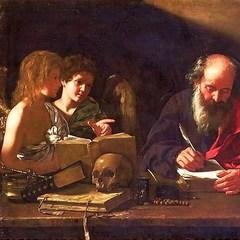
St. Jerome (c. 347 – September 30, 420) was an early Christian Latin Church Father, biblical scholar, and translator. He is best known for his translation of the Bible from Greek and Hebrew into Latin, known as the Vulgate, which became the standard Bible for the Latin Church in the Middle Ages. Born in Stridon (modern-day Croatia or Slovenia), Jerome studied rhetoric and philosophy in Rome. He lived an ascetic life and established a monastery near Bethlehem, dedicating himself to scholarship and biblical commentary. His works include numerous letters, commentaries, and theological treatises, deeply influencing Western Christian thought. Jerome is venerated as a saint by the Catholic Church, Eastern Orthodox Church, Lutheranism, and Anglicanism, with his feast day on September 30. He is often depicted as a hermit with a lion, symbolizing his connection with nature and the divine. more

You May Also Like

“It is this one Spirit who makes it possible for an infant to be regenerated . . . when that infant is brought to baptism; and it is through this one Spirit that the infant so presented is reborn. For it is not written, 'Unless a man be born again by the will of his parents' or 'by the faith of those presenting him or ministering to him,' but, 'Unless a man be born again of water and the Holy Spirit.' The water, therefore, manifesting exteriorly the sacrament of grace, and the Spirit effecting interiorly the benefit of grace, both regenerate in one Christ that man who was generated in Adam.”

“Such then in number and importance are the precious ties belonging to the Christian name which keep a believer in the Catholic Church, as it is right they should ... With you, where there is none of these things to attract or keep me... No one shall move me from the faith which binds my mind with ties so many and so strong to the Christian religion... For my part, I should not believe the gospel except as moved by the authority of the Catholic Church.”

“And so, lastly, does the very name of "Catholic", which, not without reason, amid so many heresies, the Church has thus retained; so that, though all heretics wish to be called Catholics, yet when a stranger asks where the Catholic Church meets, no heretic will venture to point to his own chapel or house.”

“In the Catholic Church, there are many other things which most justly keep me in her bosom. The consent of peoples and nations keeps me in the Church; so does her authority, inaugurated by miracles, nourished by hope, enlarged by love, established by age. The succession of priests keeps me, beginning from the very seat of the Apostle Peter, to whom the Lord, after His resurrection, gave it in charge to feed His sheep (Jn 21:15-19), down to the present episcopate.”

“What you see is the bread and the chalice; that is what your own eyes report to you. But what your faith obliges you to accept is that the bread is the body of Christ and the chalice is the blood of Christ. This has been said very briefly, which may perhaps be sufficient for faith; yet faith does not desire instruction”

“Benedict XVI leaves no room for uncertainty or minimization. At this present time in which she feels humiliation, the Church learns from the Pope to not fear the truth, even when it is painful, to not hide it or cover it up. However, this does not mean enduring strategies to discredit (the Church) in general...It is appropriate, then, that we all return to calling things by their names at all times, to identify evil in all of its gravity and in the multiplicity of its manifestations.”

“The Church was founded upon Peter: although elsewhere the same is attributed to all the Apostles, and they all receive the keys of the kingdom of heaven, the strength of the Church depends upon them all alike, yet one among the twelve is chosen so that when a head has been appointed, there may be no occasion for schism.”