Quotessence
Home / Quotes / Quote by Duke Ellington

Quote by Duke Ellington

“If anybody was Mr. Jazz it was Louis Armstrong. He was the epitome of jazz and always will be. He is what I call an American standard, an American original. ... I merely took the energy it takes to pout and wrote some blues. ... I don't need time, I need a deadline. ...There are two kinds of music. Good music, and the other kind. ... Music is my mistress, and she plays second fiddle to no one.”

Quote by Duke Ellington

Author
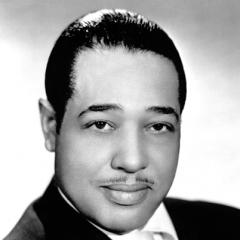
Duke Ellington
Duke Ellington

Duke Ellington was an outstanding American composer and pianist, renowned for his unique jazz style and rich musical compositions. His musical career spanned half a century and had a profound impact on the development of jazz. more

You May Also Like

“When I wrote the song, I had the sea near Bombay in mind. We stayed at a hotel by the sea, and the fishermen come up at five in the morning and they were all chanting. And we went on the beach and we got chased by a mad dog-big as a donkey. ... I think that songwriting changed when groups started spending more time in the studio. ... I've written so many songs about Englishmen, I have to go elsewhere. ... Our repertoire consisted of rhythm and blues, sort of country rhythm and blues, Sonny Terry things.”

“It was my 16th birthday-my mom and dad gave me my Goya classical guitar that day. I sat down, wrote this song, and I just knew that that was the only thing I could ever really do-write songs and sing them to people. [...] Everything on this record is what I really wanted to say, and I'm back to being the poet I always thought I was.”

“You can't ask me to explain the lyrics because I won't do it...I always believed that I have something important to say and I said it. That's why I survived because I still believe I've got something to say. ... I don't like overdubs, never liked them. ... The music business doesn't interest me anymore...Don't the people you're around shape the music, is that what you're saying? Everything does. ... I'm not joking around when I've said occasionally, trying to learn how to play a D chord properly has been a very big thing for me.”

“I have a weird life because I live on songwriting royalties, which are a strange income. Sometimes it rains, sometimes it doesn't. ... I want to grow up with my audience. I don't expect to be getting through to the younger pop crowd. I learned that from Paul Simon. ... When you blame yourself, you learn from it. If you blame someone else, you don't learn nothing, cause hey, it's not your fault, it's his fault, over there. ... People have told me songs I've written have changed their life. That's remarkable. That keeps your faith.”

“But there's a thin line between songwriting and arranging. ... Recording at home enables one to eliminate the demo stage, and the presentation stage in the studio, too. ... And I think it's safe to say that the single very impressive figure to me was Merle Haggard. ... Dylan can do no wrong. ... Glenn Gould was my hero. Glenn Gould was my idol. I loved him. ... I loved Hendrix. I mean, really, really loved him. As if he were one of the great classical composers. And he was. That's how I saw him.”

“I always try to write a song, I never just want to write a record. Originally I was not writing songs for myself. ....And I can say this, most of the people who have recorded my songs are songwriters themselves. ... Even if I don't release it myself, somebody else might hear it and want to record it. When you write a song, it gives it that potential. When you write a song, a song has longevity. ... So I wanted to sing inspirational music, and that's exactly how I approached it-only the words have been changed to declare my relationship with God. Songwriting is my gift from God.”

“I wake up from dreams and go, 'Wow, put this down on paper.' The whole thing is strange. You hear the words, everything is right there in front of your face. ... I am always writing a potpourri of music. I want to give the world escapism through the wonder of great music and to reach the masses. ... And I remember going to the record studio and there was a park across the street and I'd see all the children playing and I would cry because it would make me sad that I would have to work instead.”