“Justice is a moral virtue, merely because it has that tendency to the good of mankind, and indeed is nothing but an artificial invention to that purpose. The same may be said of allegiance, of the laws of nations, of modesty, and of good manners. All these are mere human contrivances for the interest of society.”
Quote by David Hume
Work
A Treatise of Human Nature
This seminal text delves into the fundamental aspects of human nature, including perception, reason, and moral sense, offering a comprehensive analysis of human experience and knowledge. more
Author
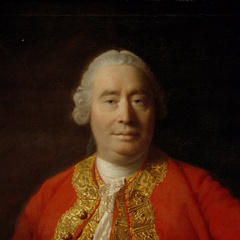
David Hume
David Hume, born on May 7, 1711, in Edinburgh, Scotland, and died on August 25, 1776, was an outstanding philosopher, historian, and economist. Known for his contributions to empiricism and skepticism, his works have had a profound impact on subsequent philosophy, economics, and psychology. more
You May Also Like
“Absolute monarchy,... is the easiest death, the true Euthanasia of the BRITISH constitution.”
Source: Essays moral, political, and literary. (Life of the author, etc.).
Source: An Enquiry Concerning Human Understanding; [with] A Letter from a Gentleman to His Friend in Edinburgh; [and] An Abstract of a Treatise of Human Nature
Source: An inquiry concerning human understanding. A dissertation on the passions. An inquiry concerning the principles of morals. The natural history of religion
Source: Essays and Treatises on Philosophical Subjects
Source: An Enquiry Concerning Human Understanding ; [with] A Letter from a Gentleman to His Friend in Edinburgh ; [and] An Abstract of a Treatise of Human Nature
“Virtue, like wholesome food, is better than poisons, however corrected.”
Source: The philosophical works of David Hume