Quotessence
Home / Quotes / Quote by Gautama Buddha

Quote by Gautama Buddha

Author

Gautama Buddha
Gautama Buddha

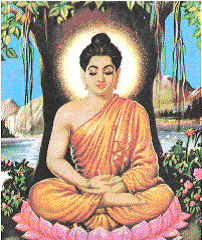
Gautama Buddha, also known as Siddhartha Gautama or the Buddha, was a spiritual leader and the founder of Buddhism. Born in the 6th century BC in the region of Lumbini, Nepal, he renounced his princely life to seek enlightenment. His teachings, emphasizing the Four Noble Truths and the Eightfold Path, have profoundly influenced the lives of millions around the world. more

You May Also Like

“The more tremendous the divinity is represented, the more tame and submissive do men become his ministers: And the more unaccountable the measures of acceptance required by him, the more necessary does it become to abandon our natural reason, and yield to their ghostly guidance and direction.”

“Philosophers stretch the meaning of words until they retain scarcely anything of their original sense. They give the name of "God" to some vague abstraction which they have created for themselves; having done so they can pose before all the world as deists, as believers of God, and they can even boast that they have recognized a higher, purer concept of God, notwithstanding that their God is not nothing more than an insubstantial shadow and no longer the mighty personality of religious doctrines.”

“The Romans called the Christians atheists. Why? Well, the Christians had a god of sorts, but it wasn't a real god. They didn't believe in the divinity of apotheosized emperors or Olympian gods. They had a peculiar, different kind of god. So it was very easy to call people who believed in a different kind of god atheists. And that general sense that an atheist is anybody who doesn't believe exactly as I do prevails in our own time.”

“A prevalent fallacy is the assumption that a proof of an afterlife would also be a proof of the existence of a deity. This is far from being the case. If, as I hold, there is no good reason to believe that a god either created or presides over this world, there is equally no good reason to believe that a god created or presides over the next world, on the unlikely supposition that such a thing exists.”