Quotessence
Home / Quotes / Quote by J. L. Mackie

Quote by J. L. Mackie

“The balance of probabilities, therefore, comes out strongly against the existence of a god.”

Quote by J. L. Mackie

Author
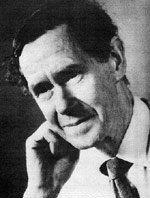
J. L. Mackie
J. L. Mackie

J. L. Mackie was a distinguished British philosopher whose work had a profound impact on the field of ethics. He is particularly renowned for his exploration of moral skepticism and his advocacy for ethical naturalism. His career was marked by his analytical approach to philosophical questions, and he made significant contributions to the understanding of ethics. more

You May Also Like

“A prevalent fallacy is the assumption that a proof of an afterlife would also be a proof of the existence of a deity. This is far from being the case. If, as I hold, there is no good reason to believe that a god either created or presides over this world, there is equally no good reason to believe that a god created or presides over the next world, on the unlikely supposition that such a thing exists.”

“In a nuclear age, and in an age of serious environmental degradation, apocalyptic belief creates a serious second order danger. The precarious logic of self-interest that saw us through the Cold War would collapse if the leaders of one nuclear state came to welcome, or ceased to fear mass death.”

“Nowadays, by contrast, Christianity specialises in soft-focus mood music; its threats of hell, its demand for poverty and chastity, its doctrine that only the few will be saved and the many damned, have been shed, replaced by strummed guitars and saccharine smiles. It has reinvented itself so often, and with such breathtaking hypocrisy, in the interests of retaining its hold on the gullible, that a medieval monk who woke today, like Woody Allen's Sleeper, would not be able to recognise the faith that bears the same name as his own.”

“If all people learned to think in the non Aristotelian manner of quantum mechanics, the world would change so radically that most of what we call "stupidity" and even a great deal of what we consider "insanity" might disappear, and the "intractable" problems of war, poverty and injustice would suddenly seem a great deal closer to solution.”