Quotessence
Home / Authors / Daniel Dennett
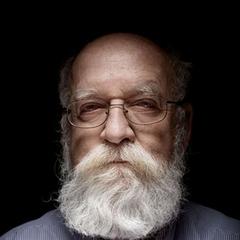
Daniel Dennett

Daniel Dennett Quotes

Philosopher

Filter quotes by topic

Famous Daniel Dennett Quotes

“In most sciences, there are few findings more prized than a counterintuitive result. It shows something surprising and forces us to reconsider our often tacit assumptions. In philosophy of mind, a counterintuitive “result” (e.g., a mind-boggling implication of somebody’s “theory” of perception, memory, consciousness, or whatever) is typically taken as tantamount to a refutation. This affection for one’s current intuitions, sometimes amounting (as we saw in the previous chapter) to a refusal even to consider alternative perspectives, installs deep conservatism in the methods of philosophers. Conservatism can be a good thing, but only if it is acknowledged. By all means, let’s not abandon perfectly good and familiar intuitions without a fight, but let’s recognize that the intuitions that are initially used to frame the issues may not live to settle the issues.”

“These bizarre examples attempt to prove one conceptual point or another by deliberately reducing all but one underappreciated feature of some phenomenon to zero, so that what really counts can shine through. The twin earth example sets internal similarity to a maximum (you are whisked off to Twin Earth without being given a chance to register this huge shift) so that external context can be demonstrated to be responsible for whatever our intuition tells us.”

“Susan Blackmore: Düşüncelerinin birçoğunun lisanstayken şekillendiğini ve o zamandan beri de bunları ayrıntılandırdığını ve açıkladığını söyledin. Ama ben asıl şunu bilmek istiyorum: Bir bilinç filozofu olarak seni gerçekten değiştiren veya kendin hakkında nasıl hissettiğini değiştiren herhangi bir şey oldu mu hiç hayatında? Daniel Dennett: Hatırladığım kadarıyla dine dönme gibi bir deneyimim olmadı! Ama felsefenin dışında insanlarla kurduğum etkileşimlerin hayatımda büyük bir etkisi olduğunu düşünüyorum. Kariyerimin muhtemelen ilk beş yılında, cilalı taş devri kadar eskiden, yani 60'ların sonunda, çoğunlukla filozoflarla takılmaya devam ediyordum ve zamanımın görece daha küçük ama çok önemsediğim ve beni hayretlere düşüren bir kısmını da başka disiplinlerden insanlarla konuşarak geçiriyordum. İnsanlarla yapay zeka, biyoloji, nörobilim ve psikoloji hakkında konuştuğum vakit filozof meslektaşlarımdan daha fazla şey öğrendiğimi ve bunları felsefi açıdan daha ilginç bulduğumu fark etmeye başladım. Yıllar içinde benim açımdan eğlenceli olan şeyin peşinden gittim ve sonrası kendiliğinden gelişti. Felsefe harici konferanslara ve etkinliklere giderek daha fazla davet edilmeye, daha fazla makale ve kitap okumaya başladım; hatta öyle ki felsefeyi artık görev olarak yapıyordum. Felsefe okurken, iyi bir biyoloji metni veya iyi bir psikoloji yahut yapay zeka metni okumaya kıyasla ne kadar da az eğlendiğimi fark edince şok oluyorum. İşte benim için büyük farkı yaratan da bu oldu. Tabii bu, sahadaki birçok insanın, "O halde Dennett artık filozof değil, önceden bir filozoftu belki ama artık değil" demesi anlamına geliyor. Bu konu hakkında tartışmak istemiyorum ama eğer bu doğruysa, belki de bütün filozofların felsefeyi bırakması ve benim yaptığım şeyi yapması gerekiyor. Çünkü bana sorarsanız, felsefi sonuçlar elde ediyorum ve felsefi bir ilerleme kat ediyorum. Bunun, eski zamanlarda yaptığımız o içi boş felsefeden çok daha iyi olduğunu düşünüyorum. Susan Blackmore: Peki, nedir felsefe? Daniel Dennett: Felsefe, henüz sorman gereken doğru soruların ne olduğunu bilmezken yaptığın şeydir.”

“Moreover, the eye contains a big flaw: the retina is inside out. Why would an almighty designer do such a thing? No intelligent designer, .. would put such a clumsy arrangement in a camcorder, and this is just one of the hundreds of accidents frozen in evolutionary history that confirm the mindlessness of the historical process.”

“People ache to believe that we human beings are vastly different from all other species - and they are right! We are different. We are the only species that has an extra medium of design preservation and design communication: culture.”

“Every living thing is, from the cosmic perspective, incredibly lucky simply to be alive. Most, 90 percent and more, of all the organisms that have ever lived have died without viable offspring, but not a single one of your ancestors, going back to the dawn of life on Earth, suffered that normal misfortune. You spring from an unbroken line of winners.”

“The task of the mind is to produce future, as the poet Paul Valery once put it. A mind is fundamentally an anticipator, an expectation-generator. It mines the present for clues, which it refines with the help of the materials it has saved from the past, turning them into anticipations of the future. And then it acts, rationally, on the basis of those hard-won anticipations.”

“I have shown that those who deplore Artificial Intelligence are also those who deplore the evolutionary accounts of human mentality: if human minds are non-miraculous products of evolution, then they are, in the requisite sense, artifacts, and all their powers must have an ultimately mechanical explanation. We are descended from macros and made of macros, and nothing we can do is beyond the power of huge assemblies of macros.”

“Has it ever occurred to you how lucky you are to be alive? More than 99 percent of all the creatures that have ever lived have died without progeny, but not a single one of your ancestors falls into that group! ... Not a single one of your ancestors, all the way back to the bacteria, succumbed to predation before reproducing, or lost out in the competition for a mate.”

“Highly technical philosophical arguments of the sort many philosophers favor are absent here. That is because I have a prior problem to deal with. I have learned that arguments, no matter how watertight, often fall on deaf ears. I am myself the author of arguments that I consider rigorous and unanswerable but that are often not such much rebutted or even dismissed as simply ignored.”

“If I were to give a prize for the single best idea anybody ever had, I'd give it to Darwin for the idea of natural selection - ahead of Newton, ahead of Einstein - because his idea unites the two most disparate features of our universe: the world of purposeless, meaningless matter and motion, particles jostling on the one side, and the world of meaning and purpose, design on the other.”

“The traditional view of purpose says it comes from on high, from God, from the Creator. Darwin's idea of natural selection makes people uncomfortable because it reverses the direction of tradition. Whereas people used to think of meaning coming from on high and being ordained from the top down, now we have Darwin saying, "No, all of this design can happen, all of this purpose can emerge from the bottom up without any direction at all."”

“For more than a century, people have often thought that the conclusion to draw from Darwin's vision is that Homo sapiens, our species - and we're just animals too, we're just mammals - that there is nothing morally special about us. I myself don't think this follows at all from Darwin's vision, but it is certainly the received view in many quarters.”

“After Darwin, God's role changes from being the designer of all creatures great and small to being the designer of the laws of nature, from which natural selection can unfold, to being perhaps just the chooser of the laws. By the time God's role has been so diminished, he becomes a bit like a constitutional monarch, presiding ceremonially but not having any more work to do. That's a place for God if it makes people comfortable to keep God as the presider over the universe. I suppose that is satisfying for many.”

“I think that there are no forces on this planet more dangerous to us all than the fanaticisms of fundamentalism, of all the species: Protestantism, Catholicism, Judaism, Islam, Hinduism, and Buddhism, as well as countless smaller infections. Is there a conflict between science and religion here? There most certainly is.”

“In fact, if you are faced with the prospect of running across an open field in which lightning bolts are going to be a problem, you are much better off if their timing and location are determined by something, since then they may be predictable by you, and hence avoidable. Determinism is the friend, not the foe, of those who dislike inevitability.”

“Virtually every major technological advance in the history of the human species- back to the invention of stone tools and the domestication of fire has been ethically ambiguous. If you want to reason about faith, and offer a reasoned (and reason responsive) defense of faith as an extra category of belief worthy of special consideration, I'm eager to play. I certainly grant the existence of the phenomenon of faith; what I want to see is a reasoned ground for taking faith seriously as a way of getting to the truth , and not, say, just as a way people comfort themselves and each other”

“Postmodernism, the school of 'thought' that proclaimed 'There are no truths, only interpretations' has largely played itself out in absurdity, but it has left behind a generation of academics in the humanities disabled by their distrust of the very idea of truth and their disrespect for evidence, settling for 'conversations' in which nobody is wrong and nothing can be confirmed, only asserted with whatever style you can muster.”

“While we tend to conceive of the operations of the mind as unified and transparent, they're actually chaotic and opaque. There's no invisible boss in the brain, no central meaner, no unitary self in command of our activities and utterances. There's no internal spectator of a Cartesian theater in our heads to applaud the march of consciousness across its stage.”

“When people ask me what philosophy is, I say philosophy is what you do when you don't know what the right questions are yet. Once you get the questions right, then you go answer them, and that's typically not philosophy, that's one science or another. Anywhere in life where you find that people aren't quite sure what the right questions to ask are, what they're doing, then, is philosophy.”

“The theoretical fruits of deliberate oversimplification through idealization are not to be denied... Reality in all its messy particularity is too complicated to theorize about, taken straight. The issue is, rather (since every idealization is a strategic choice), which idealizations might really shed some light... which will just land us... diverting fairy tales.”