Quotessence
Home / Quotes / Quote by Norman Cousins

Quote by Norman Cousins

“Freedom of religion, as the Founding Fathers saw it, was not just the right to associate oneself with a certain denomination but the right to disassociate without penalty. Belief or nonbelief was a matter of individual choice - a right underwritten in the basic charter of the nation's liberties.”

Quote by Norman Cousins

Author
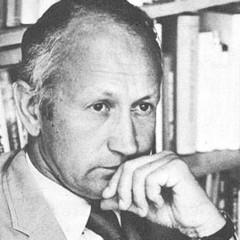
Norman Cousins
Norman Cousins

Norman Cousins was an American journalist, author, and professor. He is renowned for his role as a journalist and his promotion of laughter as a therapeutic method. Born on June 24, 1915, Cousins passed away on November 30, 1990. more

You May Also Like

“It goes beyond mere 'acknowledgment' of religion because its sole purpose is to encourage all citizens to engage in prayer, an inherently religious exercise that serves no secular function in this context. In this instance, the government has taken sides on a matter that must be left to individual conscience.”

“The American people need no course in philosophy or political science or church history to know that God should not be made into a celestial party chairman. To most of us, the manipulative invoking of religion to advance a politician or a party is frightening and divisive. The American people will tolerate religious leaders taking positions for or against candidates.”

“Way down deep the American people are afraid of an entangling relationship between formal religions - or whole bodies of religious belief - and government. Apart from constitutional law and religious doctrine, there is a sense that tells us it's wrong to presume to speak for God or to claim God's sanction of our particular legislation and his rejection of all other positions. Most of us are offended when we see religion being trivialized by its appearance in political throw-away pamphlets.”

“If there is a soul, what is it, and where did it come from, and where does it go? Can anyone who is guided by his reason possibly imagine a soul independent of a body, or the place of its residence, or the character of it, or anything concerning it? If man is justified in any belief or disbelief on any subject, he is warranted in the disbelief in a soul. Not one scrap of evidence exists to prove any such impossible thing.”