“Give up all self, all egotisms get out of anger, lust, give all to God. "I am not, but Thou art; the old man is all gone, only Thou remainest." "I am Thou." Blame none; if evil comes, know the Lord is playing with you and be exceeding glad.”
Quote by Swami Vivekananda
Work
Inspired Talks by Swami Vivekananda
This book features a compilation of Swami Vivekananda's speeches and teachings, covering a range of spiritual and philosophical topics, offering insights into his thoughts on self-improvement, spirituality, and the nature of reality. more
Author
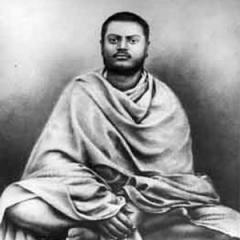
Swami Vivekananda
Swami Vivekananda (January 12, 1863 – July 4, 1902) was an Indian Hindu monk, philosopher, and social reformer. Born as Narendranath Datta in Kolkata, he was a chief disciple of the mystic Ramakrishna. He is best known for his historic speech at the 1893 Parliament of the World's Religions in Chicago, where he introduced Hinduism to the Western world. He founded the Ramakrishna Mission in 1897, focusing on social service, education, and interfaith harmony. His teachings emphasized self-realization, service to humanity, and the unity of all religions. He wrote extensively on yoga and Vedanta philosophy, influencing global spirituality and Indian nationalism. He died at the age of 39, leaving a lasting legacy as a bridge between Eastern and Western thought. more
You May Also Like
“I feel like my 50 years at Harvard were an interlude. I'm really a New Yorker.”
“I am neither the mind, nor the intellect, nor the ego, nor the mind-stuff”
Source: The Complete Works of Swami Vivekananda
“In everything we do, the serpent ego is rising up.”
Source: The Complete Works of Swami Vivekananda
“It will be a great pity if any feeling of jealousy or egotism gain ground amongst you.”
Source: The Complete Works of Swami Vivekananda
Source: The Complete Works of Swami Vivekananda
Source: The Complete Works of Swami Vivekananda
“Out of Mahat comes universal egoism.”
Source: The Complete Works of Swami Vivekananda
Source: Awakened India