Quotessence
Home / Quotes / Quote by Vernon L. Smith

Quote by Vernon L. Smith

“Samuel Gregg: Smith underscores, however, that the Scots also focused on another form of rationality: the reasonableness that is embodied and conveyed through time by un-designed habits, customs, and rules. We often do not fully understand the importance of such traditions, as Edmund Burke noted, until we dispose of them. A hallmark of Smith’s work is his study of how such knowledge helps to mold political and economic outcomes. One Means by which such knowledge has been conveyed through time, Smith states, is religion. In a long footnote to his Nobel lecture, Smith stressed religion’s role in shaping the morality needed for cohesive social behavior.”

Quote by Vernon L. Smith

Work

Author

Vernon L. Smith
Vernon L. Smith

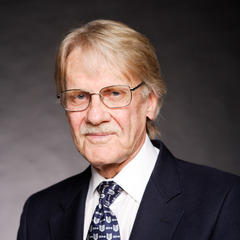
Vernon L. Smith is an esteemed economist renowned for his pioneering work in experimental economics. Born on January 1, 1927, he has received numerous honors throughout his career, including the Nobel Prize in Economics in 1991. more

You May Also Like

“These knottier questions have led some observers to suggest that national account statistics (and therefore our distributional national accounts) underestimate growth. More or less everyone who’s been involved at a high level in economic policymaking over the last decades, or an influential figure in the new economy, says it.”

“The digital revolution is not a spectator sport. It demands a proactive approach from all stakeholders, especially governments. By fostering a culture of continuous learning through a National Initiative for Education, we can unlock a future brimming with possibilities. Upskilling, reskilling, and cross-skilling will equip our workforce with the tools they need to not only adapt to the ever-evolving landscape but also leverage advanced technologies to become more productive, innovative, and competitive. A skilled and adaptable workforce is the cornerstone of a thriving digital economy. By empowering our citizens to embrace lifelong learning, we pave the way for a future where humans and machines work together, not just towards a brighter tomorrow, but a more prosperous and innovative one for all.”

“When she was his companion, her father had always felt himself stirred to interest and enterprise. "You ought to have been a man, Betty," he used to say to her sometimes. But Betty had not agreed with him. "You say that," she once replied to him, "because you see I am inclined to do things, to change them if they need changing. Well, one is either born like that or one is not. Sometimes I think that perhaps the people who must act are of a distinct race, a kind of vigorous restlessness drives them. I remember that when I was a child I could not see a pin lying upon the ground without picking it up or pass a drawer which needed closing without giving it a push. But there has always been as much for women to do as there is for men.”