Quotessence
Home / Quotes / Quote by Martin Luther

Quote by Martin Luther

“We refuse to believe that there are insufficient funds in the great vaults of opportunity of this nation.”

Quote by Martin Luther

Author
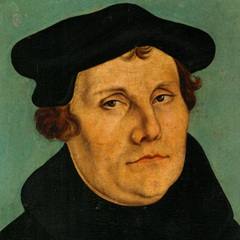
Martin Luther
Martin Luther

Martin Luther, born on November 10, 1483 and died on February 18, 1546, was a significant figure in the German Reformation. He was a monk, theologian, philosopher, and writer, known for his leading role in the Reformation. Luther challenged the authority of the Roman Catholic Church and translated the Bible into German, which had a profound impact on German culture and religion. more

You May Also Like

“But prosperity, and the happy issue of events, ought also to be attributed to his grace, in order that he may always receive the praise which he deserves, that of being a merciful Father, and an impartial Judge. About the close of the psalm, he inveighs against those ungodly men who will not acknowledge God's hand, amid such palpable demonstrations of his providence.”

“For, since the fall of Adam had brought disgrace upon all his posterity, God restores those, whom He separates as His own, so that their condition may be better than that of all other nations. At the same time it must be remarked, that this grace of renewal is effaced in many who have afterwards profaned it”

“On the contrary, therefore, Christ declares that the doctrine of the Gospel, though it is preached to all without exception, cannot be embraced by all, but that a new understanding and a new perception are requisite; and, therefore, that faith does not depend on the will of men, but that it is God who gives it.”

“God is undoubtedly ready to pardon whenever the sinner turns. Therefore, he does not will his death, in so far as he wills repentance. But experience shows that this will, for the repentance of those whom he invites to himself, is not such as to make him touch all their hearts. Still, it cannot be said that he acts deceitfully; for though the external word only renders, those who hear it, and do not obey it, inexcusable, it is still truly regarded as an evidence of the grace by which he reconciles men to himself.”

“He makes this favor common to all, because it is propounded to all, and not because it is in reality extended to all; for though Christ suffered for the sins of the whole world, and is offered through God’s benignity indiscriminately to all, yet all do not receive him.”