Quotessence
Home / Quotes / Quote by Elihu Thomson

Quote by Elihu Thomson

“Shall an invention be patented or donated to the public freely? I have known some well-meaning scientific men ... to look askance at the patenting of inventions, as if it were a rather selfish and ungracious act, essentially unworthy. The answer is very simple. Publish an invention freely, and it will almost surely die from lack of interest in its development. It will not be developed and the world will not be benefited. Patent it, and if valuable, it will be taken up and developed into a business.”

Quote by Elihu Thomson

Author
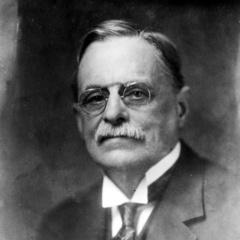
Elihu Thomson
Elihu Thomson

Elihu Thomson, born on March 29, 1853, was an accomplished electrical engineer from the United States. He is renowned for his contributions to the field of electrical engineering, particularly in the areas of power systems and electrical equipment. Thomson was one of the founders of General Electric, a company that later became one of the world's largest electrical equipment manufacturers. His work on the design and improvement of power systems had a profound impact on the development of the electrical industry. more

You May Also Like

“We know enough to be sure that the scientific achievements of the next fifty years will be far greater, more rapid, and more surprising, than those we have already experienced. ... Wireless telephones and television, following naturally upon the their present path of development, would enable their owner to connect up to any room similarly equipped and hear and take part in the conversation as well as if he put his head in through the window.”

“During the first half of the present century we had an Alexander von Humboldt, who was able to scan the scientific knowledge of his time in its details, and to bring it within one vast generalization. At the present juncture, it is obviously very doubtful whether this task could be accomplished in a similar way, even by a mind with gifts so peculiarly suited for the purpose as Humboldt's was, and if all his time and work were devoted to the purpose.”

“The scientist is not much given to talking of the riddle of the universe. "Riddle" is not a scientific term. The conception of a riddle is "something which can he solved." And hence the scientist does not use that popular phrase. We don't know the why of anything. On that matter we are no further advanced than was the cavedweller. The scientist is contented if he can contribute something toward the knowledge of what is and how it is.”