“When therefore the first spark of a desire after God arises in thy soul, cherish it with all thy care, give all thy heart into it; it is nothing less than a touch of the divine loadstone, that is to draw thee out of the vanity of time, into the riches of eternity.”
Quote by William Law
Work
I. The spirit of prayer; or, the soul rising out of the vanity of time, into the riches of eternity. In two parts ; 7,II. The way to divine knowledge; being several dialogues between Humanus, Academicus, Rusticus, and Theophilus
The text consists of dialogues that delve into the nature of prayer and the pursuit of divine wisdom. The characters, Humanus, Academicus, Rusticus, and Theophilus, engage in discussions that explore the spiritual journey and the quest for eternal truths. The work is structured into two parts, with each part offering a distinct perspective on the themes of prayer and divine knowledge. more
Author
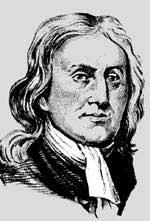
William Law
William Law, an English writer, was born in 1686 and died on April 9, 1761. His works covered various fields such as philosophy, religion, and morality, and had a profound impact on later generations. more
You May Also Like
Source: Characters and Characteristics of William Law: Nonjuror and Mystic
Source: Extracts from The spirit of prayer
Source: Mansfield Park
Source: A Serious Call to a Devout and Holy Life ; The Spirit of Love
Source: The Spirit of Prayer; The Way to Divine Knowledge, Volume 7
Source: A Serious Call to a Devout and Holy Life, adapted to the State and Condition of all Orders of Christians, Volume 4
Source: Selections from the Works of ... W. Law, making a guide to rest, in belief of the Gospel, and in obedience to the Divine Law
Source: A Serious Call to a Devout and Holy Life: Adapted to the State and Condition of All Orders of Christians, to which is Added Some Account of the Author and Three Letters to a Friend