Quotessence
Home / Quotes / Quote by Fidel Castro

Quote by Fidel Castro

“I am compelled to plead my own defence before this Court. There are two reasons: first, because I have been deprived almost entirely of legal advice; second, because only he who has been outraged as deeply as I, and who has seen his country so forsaken, its justice so reviled, can speak on an occasion like this with words made of the blood of his own heart and the very marrow of truth.”

Quote by Fidel Castro

Work

The Declarations of Havana

Browse quotes and source details for this work. more

Author
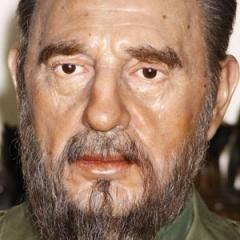
Fidel Castro
Fidel Castro

Fidel Castro, born on August 13, 1926, and died on November 25, 2016, was a former Prime Minister of Cuba. He was a key figure in the Cuban Revolution, leading the successful overthrow of Fulgencio Batista's regime in 1959 and establishing the Republic of Cuba. Castro's political career and leadership style had a profound impact on Cuba and the Latin American region. more

You May Also Like

“What is the history of Cuba but the history of Latin America? And what is the history of Latin America but the history of Asia, Africa and Oceania? And what is the history of all these peoples but the history of the most pitiless and cruel exploitation by imperialism throughout the world? At the end of the last and the beginning of the present century a handful of economically developed nations had finished partitioning the world among themselves, subjecting to its economic and political domination two-thirds of humanity, which was thus forced to work for the ruling classes of the economically advanced capitalist countries.”

“What is it that is hidden behind the Yankees' hate of the Cuban Revolution? What is it that rationally explains the conspiracy, uniting for the same aggressive purpose the most powerful and rich imperialist power in the contemporary world and the oligarchies of an entire continent, which together are supposed to represent a population of 350 million human beings, against a small country of only seven million inhabitants, economically underdeveloped, without financial or military means to threaten the security or economy of any other country? What unites them and stirs them up is fear. What explains it is fear. Not fear of the Cuban Revolution but fear of the Latin American revolution.”

“I once two beautiful children playing together. One was a fair white child; the other was her slave, and also her sister. When I saw them embracing each other, and heard their joyous laughter, I turned sadly away from the lovely sight. I foresaw the inevitable blight that would follow on the little slave's heart. I knew how soon her laughter would be changed to sighs. The fair child grew up to be a still fairer woman. From childhood to womanhood her pathway was blooming with flowers, and overarched by a sunny sky. Scarcely one day of her life had been clouded when the sun rose on her happy bridal morning. How had those years dealt with her slave sister, the little playmate of her childhood? She, also, was very beautiful; but the flowers and sunshine of love were not for her. She drank the cup of sin, and shame, and misery, whereof her persecuted race are compelled to drink. In view of these things, why are ye silent, ye free men and women of the north? Why do your tongues falter in maintenance of the right? Would that I had more ability! But my heart is so full, and my pen is so weak! There are noble men and women who plead for us, striving to help those who cannot help themselves. God bless them! God give them strength and courage to go on! God bless those, every where, who are laboring to advance the cause of humanity!”

“I have myself known two southern wives who exhorted their husbands to free those slaves towards whom they stood in a "parental relation;" and their request was granted. These husbands blushed before the superior nobleness of their wives' natures. Though they had only counseled them to do that which was their duty to do, it commanded their respect, and rendered their conduct more exemplary. Concealment was at an end, and confidence took the place of distrust.”

“John [Adams] supposed there were two reasons why the British had gone after John Hancock. First, they wanted to make an example out of him, showing what would happen to anyone, no matter how rich, who dared to defy the new Townshend Act. Second, John Hancock was the biggest financial support of men like Samuel Adams and the Sons of Liberty. In fact, John Adams was reasonably sure that Sam Adams had no money whatsoever and that John Hancock was paying all his bills.”

“In those days the Pimas always had plenty. The Papagos who lived in the desert south of us did not have a river like the Gila to water their fields, and their food was never plentiful. During the summer months, some of them would come to our village, with cactus syrup put up in little ollas, and salt, and we would give them beans and corn in exchange. The only salt we had came from the Papagos. At a certain time of the year they would go down to the ocean and get the salt from the shore where the tide left the water to dry. It was a kind of ceremony with them. They always felt that we gave them more than they could give us, although to get the salt they had walked hundreds of miles to the ocean and back. And so they would stay with us for a few days and help us harvest our wheat.”