Quotessence
Home / Quotes / Quote by Richard Florida

Quote by Richard Florida

“Already, new forms of short-term and long-term rental housing are popping up in some metro areas. You can take on a house or apartment for a few months or even a year or two in developments that are striving to provide critical elements of community - schools, healthcare, social and cultural institutions - even for people who are living there only temporarily. People invested in a home, mortgage, or community are less likely to move to more economically vibrant locales. That kind of entrenchment is going to be an impediment to the coming spatial fix.”

Quote by Richard Florida

Author
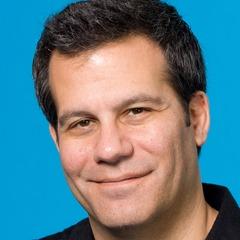
Richard Florida
Richard Florida

Richard Florida is a renowned sociologist, author, and public intellectual known for his research on the creative economy, urban development, and talent competition. Born in 1957, he graduated from Cornell University and earned a Ph.D. from New York University. His works, including 'The Creative Class' and 'The World Is Flat', have had a profound impact on discussions about globalization and urban development. more

You May Also Like

“We need to find ways to transform the more than 60 million service jobs, which make up 45 percent of U.S. employment, in the same way - rewarding workers financially, encouraging and empowering creative participation, creating professional communities, and so on. We can look to any number of new companies - from Zappos, to Starbucks, to American Apparel - for examples of how this idea might play itself out. We need to do more to make service jobs into higher-paying family-supporting jobs of the future.”

“I think we'll start defining wealth and success differently and develop new approaches to consumption. Things that have always signified wealth and security - home ownership, new cars, luxury goods - have become a burden for many people and will be replaced by more experiential consumption like travel and recreation, self-improvement, and so on. By divesting themselves of certain big-ticket possessions that have been keeping them tied down, people will gain a new freedom to live more meaningful lives. Changes in consumption and lifestyle are key to Great Resets.”

“Every single human being is creative and maximizing that creativity is critical to happiness and economic growth. Economic growth is driven by creativity, so if we want to increase it, we have to tap into the creativity of everyone. That's what makes me optimistic. For the first time in human history, the basic logic of our economy dictates that further economic development requires the further development and use of human creative capabilities. The great challenge of our time is to find ways to tap into every human's creativity.”

“We are the only major developed nation that isn't investing meaningfully in high-speed rail, and I believe we're making a mistake. Transportation systems that are fast and efficient and environmentally clean are going to enable the formation of these new mega-regions, the heart of the spatial fix. We need to be able to accelerate the movement of people, goods, and services - the very movement of ideas, knowledge, and creativity - between our major population centers. We have to build these links.”

“I can't swim. I can float. But nothing could prepare me for that, to be honest. I mean, cold is cold and this was quite extreme. I actually treasure that experience, because it was challenging enough for me to discover new strength in me. Especially the discipline and the ability to concentrate and focus so much on one thing that I can overcome some obstacles and boundaries.”

“Sometimes, when I have to learn the lines in German and French, it's that much more difficult because it doesn't just sink in automatically, organically. I have to memorize it. It's a tricky thing, as well, as when you improvise, sometimes you want to say something but you don't know how to put it. It's more difficult than in your mother tongue. It's a challenge but, at the age of fifteen, I put myself up for it and I was aware that it would be an obstacle and many times.”

“I wrote The Jesus Storybook Bible because I wanted children to know the Bible isn't mainly about you and what you're supposed to be doing. It's about God and what he has done. It's the story of how God loves his children and comes to rescue them. It's a Love Story. It's an Adventure Story. And at the center of the story is a baby - the child upon whom everything would depend. And every single story in the Bible whispers his name.”

“When you lose the story that's running like a golden stream underneath all the other stories, you're left with the idea that the Bible is a collection of random-seeming stories about various Bible characters that we're supposed to learn lessons from - almost like an Aesop's Fables. And a book of rules that God wants us to keep so he will love us. And we lose the glorious truth of the Bible that we were loved before even the beginning of time. That God had a plan. That no matter what, he would never stop loving us.”