Quotessence
Home / Quotes / Quote by Steve Inskeep

Quote by Steve Inskeep

“People don't know where they stand and what they're going to lose, and that makes things uncertain. The political parties try to meld people together, but then that becomes a problem. There are parallels here, to American cities, which, in the '80s, with massive rural to urban migration, saw incredible amounts of violence.”

Quote by Steve Inskeep

Author
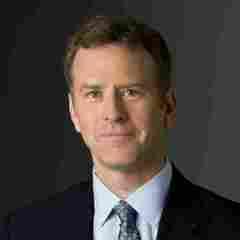
Steve Inskeep
Steve Inskeep

Steve Inskeep is a renowned media figure, currently serving as a senior journalist for National Public Radio (NPR). His career began in the late 1980s, and since then, he has accumulated extensive experience in various news fields. more

You May Also Like

“Let me name three of the people who influenced me, although it's definitely not a complete list. Ayesha Jalal, the formidable Pakistani-American historian, has rigorously re-evaluated Jinnah's political strategies leading up to Partition. Akbar Ahmed, a former diplomat and now a distinguished scholar, has documented Jinnah's life as a man who welcomed, worked with, and even married people of other faiths. And then there is Ardeshir Cowasjee, the great Parsi newspaper columnist, who in his mid-80s is a kind of living history of all of Pakistan, old enough to have known Jinnah himself.”

“My colleagues knew I was writing poems. I never hid it from them. I don't think they ever thought I was cheating on them. So, I think they probably saw it as being rather peculiar, that I was doing that sort of thing, but nobody ever suggested I shouldn't be doing it. I think that would be different on Madison Avenue or Wall Street, where you're really expected to be doing 110 percent for the company.”

“I had in effect been thrown out of graduate school because I was a lousy graduate student, and I had to find a job, and I took the first job that came along. It happened to be a management trainee job in a life insurance company, and I just stayed. It was always, mainly, the idea was that I would support myself as a writer, and I knew I would have to have some sort of work, and it didn't make a whole lot of difference to me what it was. I mean, I could have been a paper hanger or something for that matter.”

“I try to be realistic with students. And say that there's a good chance that they're not going to get a creative writing teaching job, that there aren't enough jobs to go around and the university faculties are cutting back on staff and that they may have to get some other kind of work. None of them wants to hear that, but it is true and I think I'm a good example for them of somebody who took the other route.”

“For a while the creative writing community sort of sprung out of places like Iowa and Syracuse. The graduates sort of went out, and they would found creative writing departments in the little colleges where they went, and then some of those would found other ones. I mean every college has got a creative writing department, so where are the jobs coming from? There are not any jobs out there.”

“Every poet gets to choose what kind of community he or she serves with the poems, and it's true that there is a community for very difficult, challenging poetry. It's a community that's established itself over the last 80 years, that was originally, in effect, really started by T. S. Eliot and Ezra Pound. They believed that poetry ought to contain learning, that it ought to rise upon all the learning that went before.”