Quotessence
Home / Quotes / Quote by Donald E. Westlake

Quote by Donald E. Westlake

Author

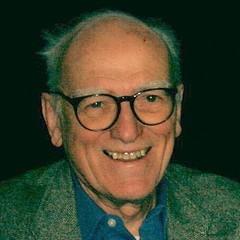
Donald E. Westlake
Donald E. Westlake

Donald E. Westlake was an American author born on July 12, 1933, and passed away on December 31, 2008. Known for his crime and detective novels, his works have been widely appreciated by readers. more

You May Also Like

“I've had stuff of mine adapted by other people, so I've come to the conclusion that a movie is a different form from a novel and there is no such thing as a true adaptation. You have to adapt to this other thing and do it right. But that voice of the original should somehow still be there, and the original intent should still be there. So if the original writer saw the movie, the writer would say, "Well, that's not what I wrote, but that's what I meant." And if you can do that, I think you've done your job as a screenwriter.”

“I'm not sure that all books aren't that way. I think that might apply to any book I was writing. The book was kind of the product of this enormous infatuation I had, not only with the office and office politics, but with perspective, and trying to tell a story from as wide a range of perspectives as you possibly can. I tried to capture it all with the first-person plural, but once I settled on that, I used it to tell the story from as many angles as I could. I guess, to put it romantically, it was about a love affair with the craft of perspective.”

“Once I had the voice, I knew I wasn't going to fall off the bicycle. I tap right back into it. It really was like learning how to ride a bike - you never forget, and I was able to carry it along with some ease. I never encountered any stumping problems that left me not knowing what to do, so I was mostly able to hold my ground. Of course, I should mention that it took me a long time to actually acquire the voice; there were a lot of frustrated attempts along the way, revisions to long sections and versions of the book that I abandoned.”

“I always knew from the beginning that this was the only way to write Then We Came To The End - that it had to be in first - person plural if it was going to illustrate how the individual becomes part of the collective. I had no interest in writing the book in a more conventional voice. It goes back to that fascination I had with telling a story in multiple ways. It was the only choice I gave myself, really - I said "This is it, pal. If you can't tell a story this way, you're going to have to abandon the book. Write it this way or give up."”

“The people at the very top could fall by and grace you with their presence and give you a little largesse, and you'd be "Oh, I'm so beloved." In a way, it was kind of like flattery. The middle managers didn't quite have that cachet, but at the same time, they had to seem like they were of that caliber. So there's a little bit of loneliness at the heart of those with a little bit of power.”