Quotessence
Home / Quotes / Quote by Gustave Flaubert

Quote by Gustave Flaubert

“Well, quite softly, one day following another, a spring on a winter, and an autumn after a summer, this wore away, piece by piece, crumb by crumb; it passed away, it is gone, I should say it has sunk; for something always remains at the bottom as one would say—a weight here, at one's heart.”

Quote by Gustave Flaubert

Work

madame bovary

Gustave Flaubert's Madame Bovary is a seminal work of 19th-century French literature. The novel follows the life of Emma Bovary, a woman who is discontent with her provincial life and marries Charles Bovary, a dull and unambitious country doctor. Emma's dissatisfaction leads her to seek fulfillment through romantic escapades and extramarital affairs, ultimately leading to disaster. Flaubert's meticulous attention to detail and his exploration of themes such as social class, materialism, and the human condition have made this novel a classic of world literature. more

Author

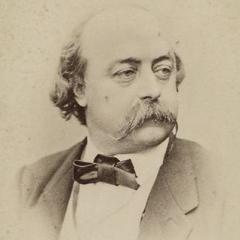
Gustave Flaubert
Gustave Flaubert

Gustave Flaubert, born on December 12, 1821 and died on May 8, 1880, was a prominent French writer of the 19th century. Known for his exquisite literary skills and profound psychological portrayals, Flaubert is best remembered for his masterpiece 'Madame Bovary'. more

You May Also Like

“There's one other thing I'd like to remind you of, my dear. There've been many times when you've sworn to me that after all that life has dealt you, it was no longer possible for you to believe in anything. I replied that both life and my studies had led me to the same conclusion. I asked you, 'What is a person permitted, once he's realized that truth is unattainable and consequently doesn't exist for him?' Do you remember your answer?" "I do, ibn Sabbah. I said something like this: 'If a person realized that everything people call happiness, love and joy was just a miscalculation based on a false premise, he'd feel a horrible emptiness inside. The only thing that could rouse him from his paralysis would be to gamble with his own face and the face of others. The person capable of that would be permitted anything.”

“No one can ever use his heart to listen or touch or feel or see or smell. It's just a lump of muscle pumping mechanically inside your ribs. It has no will and no ability to do anything but go on pumping until it gives up and withers away or is choked by some disease. Your spinal cord, on the other hand, feels. The central nervous system pours out from the spinal cord, and with it one feels pain. Pain is the most trustworthy sensation a human being can know because it teaches us what hurts. With the spinal cord, one can hear what will hurt, smell the sting of suffering, taste it, feel it, and see the world with new eyes. I learned a long time ago not to follow my heart, the hunk of meat flexing in the chest. I trust the tube locked up in a column of bone, the tube that shows me what pain is.”

“A student: "I wonder why I did what I did, maybe it was an accident" A Teacher: "Everything is a mere accident. Be it, a love or friendship. We are born by an accident, we die by an accident, we study by an accident, and sometimes, we live by an accident. However, it is not we who perform these accidents. We are just like a remote control operated by unknown creature. But worry not; your heart makes happy accidents.”