Quotessence
Home / Quotes / Quote by Jack London

Quote by Jack London

“From Martin Eden on submitting manuscripts: "There was no human editor at the other end, but a mere cunning arrangement of cogs that changed the manuscript from one envelope to another and stuck on the stamps. It was like the slot machines wherein one dropped pennies, and, with a metallic whirl of machinery had delivered to him a stick of chewing-gum or a tablet of chocolate. It depended upon which slot one dropped the penny in, whether he got chocolate or gum. And so with the editorial machine. One slot brought checks and the other brought rejection slips. So far he had found only the latter slot.”

Quote by Jack London

Author
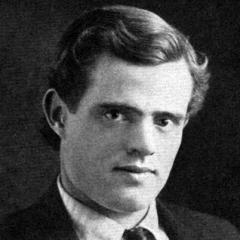
Jack London
Jack London

Jack London was an American author known for his adventure novels and realistic works. His writings often depicted the lives of the underclass and his profound insights into the natural world. His notable works include 'The Call of the Wild' and 'White Fang'. more

You May Also Like

“It is your responsibility to guard your environment. Associating with the right friends and placing yourself in a constantly motivated environment will activate the dormant potential and talents that lie within you, just like the seeds from King Tut’s tomb that could germinate and flourish after 3000 years of dormancy.”

“I keep having dreams about a lad I met back when I was seventeen,” Bliss was saying. “Perfectly innocent afternoon in its way. One of those endless summers. You never remember it raining in your past, do you? Just summers. We collected blackberries. Then we sat on the beach and talked. He took his shirt off. I kept mine on. I was too ashamed of my body to do the same. He was beautiful. So piss-elegant in his way. All cheek-bones and wrists. Tanned hairless skin. I wanted to be the centre of his world forever.” Bliss smiled, his eyes somewhere in the distance, away from the heat of all these people and their mindless chatter. “It was just a kiss. That was all it was. A sweet, sweet kiss… I never saw him again, even though I went back to that place every afternoon for a week.” His eyes refocused and he glanced at Malcolm, at Oliver. His face was hard, his voice brittle. “I found out he’d been hit by a postal van not two hours after we’d kissed. Died later that night in hospital. I overheard my mother talking about it. She said his name and I had to run away to the beach. I wept for hours. All gone, gone, gone.”

“Artistic license, also known poetic license, narrative license, and licentiate poetical, is a colloquial term (employed occasionally as a euphemism), which denotes a license to distort the facts, alter the conventions of grammar or language, or reword pre-existing text by an artist in the name of art. Liberal usage of an artistic license to restructure basic facts can result because of conscious or unconscious acts. Artistic embellishment or misrepresentation of the facts and distortion or alteration of the compositional text frequently is the by-product of both intentional and unintentional additions and omissions. An artistic license, employed at an artist’s discretion to fill in details or gloss over factual and historical gaps, raises some ethical issues. Many stories retold verbatim would bore an audience or require inordinate time and resources to reenact, describe, and view. A dramatic license eliminates mundane details and tedious facts, spruces up the picturesque background, and glamorizes the characters’ temperament and action scenes. Is it wrong to be inventive with the facts? What degree of embroidery of a series of events and the characters’ mannerisms and attributes is acceptable? How can anyone paste together a set of facts into an interesting or compelling narrative that has literary value without engaging in some creative organization to enhance the theatrical retelling and to create juxtaposition of ideas and values?”