Quotessence
Home / Quotes / Quote by Paul Auster

Quote by Paul Auster

“For the first time in his life, he stopped worrying about results, and as a consequence the terms "success and "failure" had suddenly lost their meaning for him. The true purpose of art was not to create beautiful objects, he discovered. It was a method of understanding, a way of penetrating the world and finding one's place in it.”

Quote by Paul Auster

Work

Moon Palace

Moon Palace is a science fiction novel that explores a dystopian world where political machinations and the search for personal identity are central themes. The story unfolds in a futuristic society, where the protagonist navigates a complex web of power struggles and discovers the true nature of their origins. more

Author

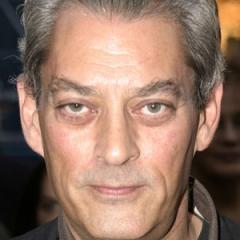
Paul Auster
Paul Auster

Paul Auster is an American author known for his unique narrative style and philosophical reflections. His works often explore themes of identity, memory, and reality, and have won him a wide audience. more

You May Also Like

“What modern art has to do in the service of culture is so to rearrange the details of modern life, so to reflect it, that it may satisfy the spirit. And what does the spirit need in the face of modern life? The sense of freedom. That naive, rough sense of freedom, which supposes man's will to be limited, if at all, only by a will stronger than his, he can never have again. The attempt to represent it in art would have so little verisimilitude that it would be flat and uninteresting. The chief factor in the thoughts of the modern mind concerning itself is the intricacy, the universality of natural law, even in the moral order. For us, necessity is not, as of old, a sort of mythological personage without us, with whom we can do warfare: it is a magic web woven through and through us, like that magnetic system of which modern science speaks, penetrating us with a network, subtler than our subtlest nerves, yet bearing in it the central forces of the world. Can art represent men and women in these bewildering toils so as to give the spirit at least an equivalent for the sense of freedom? Certainly, in Goethe's romances, and even more in the romances of Victor Hugo, there are high examples of modern art dealing thus with modern life, regarding that life as the modern mind must regard it, yet reflecting upon blitheness and repose. Natural laws we shall never modify, embarrass us as they may; but there is still something in the nobler or less noble attitude with which we watch their fatal combinations. In those romances of Goethe and Victor Hugo, in some excellent work done after them, this entanglement, this network of law, becomes the tragic situation, in which certain groups of noble men and women work out for themselves a supreme Denouement. Who, if he saw through all, would fret against the chain of circumstance which endows one at the end with those great experiences?”

“Dipping into art can be an act of self-care. It can be a cure. And if it’s not a cure, it can be a relief that allows you to rest, to go back out to fight again.”

“Artists and philosophers should learn one thing: they should not expect that their art or their philosophy should produce money. If they need money, they should get purely involved in making money and not mix money with their art or their philosophy. Therein lies the defect of the examples you have given. They needed money and therefore called on their art or philosophy to produce money. Wrong! Money corrupts. Selling art or philosophy for money corrupts the art and the philosophy.”